Leading questions – Alastair Dorward
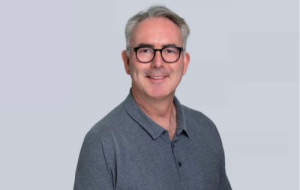 Alastair Dorward (1987, PPE) is a consumer products entrepreneur based in San Francisco Bay Area. As a serial-entrepreneur, he has built brands in the food, personal care and household categories. He was the founding CEO of Method, the pioneering household brand recognised for design and sustainability. He is the former CEO of the detergent brand Dropps, that invented the first liquid laundry pod, eliminating the need for a plastic bottle. Currently Senior Advisor to Novi, the leading platform for AI-driven product discoverability, he helps brands ensure their products are recommended by Large Language Models.
Over the course of his career, Alastair has founded and led several companies, some of which have gone on to global success, while others of his companies have failed. He has learned more from the latter than the former.
Could you tell us a little about your journey from Scotland to San Francisco, and how your PPE degree at Univ shaped that path?
No AI model could have predicted that reading PPE at Univ would propel this Edinburgh-born lad towards founding a soap brand in San Francisco. In the 1980s, Univ was a mecca for bright young Scots seeking to broaden horizons. Several influential Fellows – notably Iain McLean and Roy Park – helped forge this path by recognising the Scottish Higher during admissions. As a result, Univ’s St Andrews Society boasted a considerable membership, one that occasionally disturbed the peace of the main quad with the skirl of bagpipes.
The rigours of PPE equipped me admirably for a career as a professional hand-waver, and my first calling – management consulting – rewarded this skill. Bain & Company proved an excellent training ground for a graduate and I was able to travel widely. One tour of duty in 1991 took the form of a six-month posting in Poland, where I applied my undergraduate grasp of macroeconomics to help shape industrial policy for the Polish Ministry of Privatisation. After a splendid fourteen months at INSEAD in Fontainebleau, Bain offered me a place in the San Francisco office – and I fell wholly in love with the Bay Area: its natural beauty, the daily miracle of blue sky, and a culture profoundly sympathetic to entrepreneurs.
I tend to zig where others zag, so rather than pursuing a career with budding tech bros, I have spent the past thirty years building brands employing business as an agent of change. I am fascinated by the right brain-left brain cycle required to propel brands – a creative insight or expression can receive instant consumer feedback, and this continuous cycle, properly harnessed, is capable of disrupting even the most entrenched FMCG (Fast Moving Consumer Goods) incumbents. The old adage about Scots being perfectly balanced – a chip on each shoulder – captures something of the David-and-Goliath spirit that animates challenger brands. I have found that a growing proportion of American consumers are instinctively drawn to the underdog brand.
Do you have a favourite memory from your time at Univ?
It is difficult to distil three years into a single favourite memory, so I shall permit myself two.
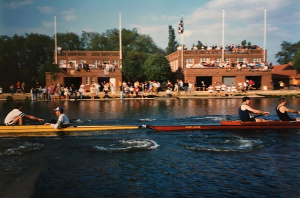
The final seconds before Univ took the Headship in 1990
In May 1990, Univ’s First Men’s VIII reclaimed Head of the River after 76 years. I was rowing in the Second VIII for Summer Eights. On paper, the Second Boat was no match for the First – yet in practice, the collective enthusiasm of the lower crew applied pressure. Iron sharpened iron, and the final bump over Oriel felt like a victory for every UCBC member, celebrated full-heartedly at the Bump Supper. I was heartened to read of the recent UCBC Women’s success – congratulations to all involved.
My friendships deepened at the Chalet des Anglais. The exquisite beauty of the mountains and dramatic thunderstorms formed the backdrop to successive reading and walking days. The conversations held on the trail and around the dinner table remain a highlight.

Reverend Bill Sykes
Were there any characters or mentors at Univ who left a lasting impression on you?
Bill Sykes’ compassion and grace underpinned Univ’s culture of kindness. I had lost my mother in the months before coming up to Univ, so it was to Bill that I turned for guidance and counsel. He never pressed religiosity upon me yet kept alive a spark of spirituality during one of the more testing passages of my life.
David Soskice cut an elegant, distinguished presence at Univ and brought PPE to life with an infectious passion and an unforgettable guffaw. I am grateful for him challenging us and setting the academic bar high and my peer group is highly accomplished thanks in no small part to David’s inspiration. I am humbled to see around me the talent that he helped unleash.
Sandra Williamson, Hall Manager, presented a warm maternal figure for all of us. Her cheery smile and down-to-earth Scottishness was a haven for those of us from north of the border. We are grateful for her culinary prowess during Burns Suppers.
Is there something you learned during your time at Univ that continues to shape your thinking or approach today?
Univ broadened my horizons immeasurably, exposing a rather parochial young Scot to brilliant minds and perspectives and cultures far removed from anything previously encountered. The more I submitted my ideas to the constructive scrutiny of that environment, the more they evolved and gathered strength. It was uncomfortable at first – I have little doubt that I rapidly laid bare both my ignorance and my biases – yet in time I came to understand that it is precisely in seeking genuine dialogue, in first understanding and then openly considering radically different points of view, that the work of expanding one’s horizons is accomplished.
In moving to California and in embarking on the serial-entrepreneur’s journey, I have heeded that lesson closely. The growth comes from being outside of one’s comfort zone.
You’ve built and led iconic eco-friendly brands such as Method and Dropps. What early insights led to your commitment to sustainability in consumer goods?
The Method brand was built on two principles: elegant design coupled with a commitment to people and planetary health. In other words, counter-worthy cleaning products that were formulated to be safer to use. As a nature-loving Scot I had found that the environmental movement of the 1980s to be radical and reflexively anti-business. In 2003 I was introduced to the Cradle-to-Cradle movement as defined by the work of Bill McDonough and Michael Braungart. If businesses can be designed such that the output of their consumption becomes an ingredient in future production, you can close the loop where Waste = Food. In these principles, I was able to reconcile the goals of business growth with environmental responsibility. That thinking proved quietly transformative. It set me on a course of viewing entrepreneurial enterprise as a potential instrument of change – creating a new normal that challenges the ways larger businesses operate. This has been the red-thread connecting the various brands I have helped grow over the last couple of decades.
In your view, why is it important for alumni and friends to support Univ?
I attended Univ at a time when, for many, higher education was effectively free. My four children, by contrast, attended American universities where we paid eye-watering fees. I hold a conviction that higher education is a human right and must be equally accessible to all on the basis of merit. I also hold the belief that the pedagogical model offered by Univ is of profound value. It is difficult, however, to argue that the tutorial system can be sustained from public funds.
The only coherent way to reconcile these positions is for alumni to play a meaningful role in bridging that fiscal gap. I am struck by the scale of capital raised to grow the endowments of American universities. There may be a lingering British distaste for this practice or for asking for money to support an academic institution that used to be publicly funded. All the more reason, then, to acknowledge how impressively Univ has led the way in cultivating broad financial support from its alumni. I hope that spirit of leadership endures.
Which aspects of the College’s work or impact resonate most strongly with you?
Several strands of Univ’s work resonate with me around a single conviction: that the privilege of a Univ education carries with it an ongoing invitation for giving. Giving does mean financial support but Univ’ spirit of kindness can show up through mentorship, internship and outreach other forms of giving. Time and experience generously shared can be equally valuable.
Univ’s access agenda speaks to me most directly. I arrived at the College when individual Fellows were quietly widening the path for Scottish pupils. What strikes me now is how that early instinct brought forth the Opportunity Programme – a bold idea proven at scale across the University, that has transformed access and strengthened diversity. I am grateful to Baroness Amos – her lifetime’s dedication to opening doors has made Univ stronger.
To mark the National Year of Reading, we are inviting Univ members to recommend a book that has inspired them or changed their perspective. Is there a title you would like to share?
Cradle to Cradle by Bill McDonough and Michael Braungart
Published: 18 August 2026
This feature was adapted from one first published in Issue 18 of The Martlet; read the full magazine here or explore our back catalogue of Martlets below:



Explore Univ on social media