
Witchcraft at Univ
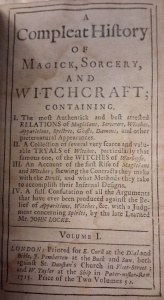
Figure 1 Title page of ‘A compleat history of magick, sorcery and witchcraft’
Exodus 22:18 in the King James Bible reads “Thou shalt not suffer a witch to live”. Strong words but possibly to be expected given that the sponsor for the translation, King James I and VI wrote Daemonologie, a text all about the evils of witchcraft. First published in 1597, this philosophical dissertation focuses on witchcraft, necromancy and demonology. While there are several copies of this early edition in Oxford libraries, we don’t have one at Univ. What we do have instead is A compleat history of magick, sorcery and witchcraft by Richard Boulton (Browne N.2.9). Published in 1715, this book is a mixture of explanations about the ‘most authentick and best attested relations of magicians, sorcerers, witches, apparitions, spectres, ghosts, dæmons, and other preternatural appearances’ and attempts to prove the existence of the supernatural through philosophical arguments and evidence from witch trials. Rather than being a part of our main collection, this book is a part of the Browne Library, one of our special collections holding almost 2000 pre-1800 titles that were bequeathed to the College by Univ Master John Browne. You can find more information on it here: Univ’s “heir loom” – University College Oxford (Univ).
In order to understand A compleat history of magick, sorcery and witchcraft, a little background in the attitudes towards witchcraft in 17th century Britain is needed. In Malcolm Gaskill’s Witchcraft: a very short introduction, he describes witchcraft as being seen as a ‘conspiracy against God and Man’ and as ‘extremely dangerous’, demanding ‘decisive action’ (p.22, 2010). It was seen as a crime in Britain, first defined as a felony by Henry VIII’s Witchcraft Act 1541 and morphing as an offence depending on the societal beliefs in witchcraft right up until the repeal of the Fraudulent Mediums Act 1951 in May 2008. The death penalty was in place at certain periods of time, though this was usually by hanging rather than by burning as is popularly believed. Burning was for people convicted of heresy rather than witchcraft which was its own separate crime.
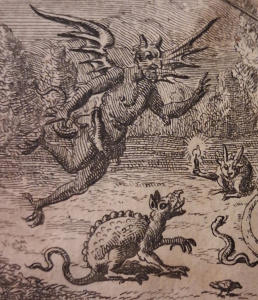
Figure 2 A Devil-like figure
In the introduction to The Hammer of Witches: a complete translation of the Malleus Malificarum (a book which had debateable influence on witch finding practices and trials), Mackay describes witchcraft, or as the Malleus Malificarum terms it, sorcery, as being ‘part of a constant war that is being waged between God and his fallen angel Satan’ (p.22 2009). Central to the belief in witchcraft was the figure of the Devil. There was a slightly complicated bit of theology going on with this, in that God was often said to be allowing the Devil to ‘tempt sinners’ (Gaskill, p.22, 2010) into their own downfall due to all Christians needing to be ‘challenged and chastened’ (Gaskill, p.23, 2010).
A compleat history of magick, sorcery and witchcraft refers to witchcraft as ‘Diabolical Arts’ practiced by ‘wretched persons’ who make ‘abominable contracts with the Devil’. The aim of the book itself is to ‘shew what Power the Devil hath to torment, as well as deceive mankind’. But what exactly does the book claim witchcraft is? Some examples that it gives include:
- ‘…where lawful Arts and Sciences fail of giving them Satisfaction, they are apt to apply themselves to the black and unlawful Science of Magick…’ (p.7)
- ‘The Rudiments of the Devil are often such unlawful Charms, which old Women often make use of to produce Effects without natural causes…’ (p.7)
Witches were blamed for all sorts of things. Crops failing, sickness in livestock and people, ships sinking (watching a shipwreck is reportedly what got James I and VI so incensed about witches). They could be accused by anyone, and anyone could be a witch. In the majority of cases in England, however, those accused of witchcraft were women.
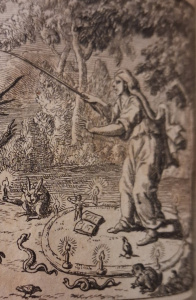
Figure 3 Woman conducting a ritual
The fact that women were accused of witchcraft more than men is explained in Daemonology as them being ‘frailer than man is, so is it easier to be intrapped in [the] grosse snares of the Devill’, using the example of the temptation of Eve in the Garden of Eden as evidence.
A compleat history of magick, sorcery and witchcraft states that:
‘As for the Reason why Women are more frequently concerned in this Craft than Men; it is partly occasioned by their Frailty, as Eve was thought the fitter subject for the Devil to work upon, and partly because they are more inclined to revenge.’
This inclination towards revenge is important as revenge was often seen as a motive for committing witchcraft. People were accused of harming others that they may have recently had some kind of dispute with using magic and sorcery. Equally, however, allegations of witchcraft could be an excellent way to get revenge against someone you were in an argument with. A perfect example of this is close to home, coming from the Oxfordshire village of North Moreton near Didcot.
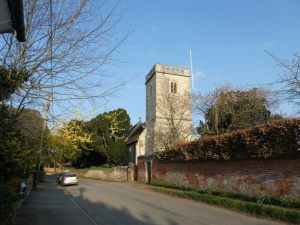
Figure 4 North Moreton church (credit: Basher Eyre licensed for reuse under the Creative Commons Attribution-ShareAlike 2.0 license)
In 1604, 14-year-old Anne Gunter started experiencing fits and periods of total paralysis, during which she would name three local women: Elizabeth Gregory, Agnes Pepwell and her daughter Mary Pepwell. A ‘witch hunter’ called John Wendore was brought in from Newbury to examine Anne for signs of witchcraft. The situation worsened, with Anne frothing at the mouth and releasing pins from her mouth and hands. Local priests and Oxford scholars came to examine her, but no one had any answers beyond it being obviously witchcraft.
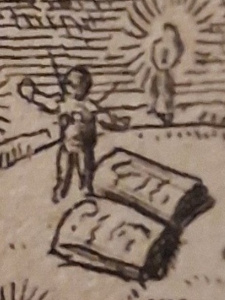
Figure 5 Poppet stuck with pins
Elizabeth Gregory, Agnes Pepwell and Mary Pepwell were arrested and imprisoned in Abingdon to await trial. Agnes confessed that the three of them had been practising witchcraft for years, though it is unclear whether this was a forced confession or not. However, Thomas Hinton, a local landowner and future MP, had become interested in the case and determined to prove that it was a hoax. He investigated the pins and realised that they were coming from around the Gunter household rather than having a more sinister origin. These findings provided enough evidence for the 3 women to be released without charge.
The story takes a royal turn here, with Brian Gunter (Anne’s father) requesting an audience with King James I and VI who was visiting Oxford at the time. This was granted though when it came down to it, their audience was with Archbishop Richard Bancroft. He investigated the situation and that was when things turned sour for the Gunter family. Brian Gunter had narrowly avoided murder charges for killing two men during a football match. These men were both sons of the Gregory family, making an obvious motive for him to accuse Elizabeth.
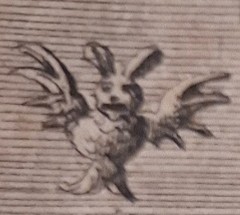
Figure 6 Small demonic creature
While this happened in 1604 and A compleat history of magick, sorcery and witchcraft was published in the early 1700s, it gives an idea of the historical attitudes towards witchcraft within Britain. Gaskill says that for a ‘relatively short period of time, between the 15th and 18th centuries, witchcraft was made real’ through both ‘superstition and primitivism’ and ‘law and science’ (p.60, 2010). A compleat history of magick, sorcery and witchcraft seems to blend the two, providing what it terms as ‘evidence’ in accounts of witch trials, which themselves were fuelled by superstition.
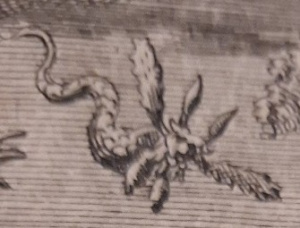
Figure 7 Small demonic creature
Witches are still a part of our popular culture. Whether it’s the TV show Charmed, the All Souls trilogy of books or the rise in popularity on social media for witchcraft related content, the fear and stigma around witches has lessened. But it hasn’t completely disappeared. A compleat history of magick, sorcery and witchcraft can show us a part of the development of these attitudes, helping us to understand better where they have come from.
Bibliography
Boulton, Richard, et al. A Compleat History of Magick, Sorcery, and Witchcraft; : Containing, I. The Most Authentick and Best Attested Relations of Magicians, Sorcerers, Witches, Apparitions, Spectres, Ghosts, Dæmons, and Other Preternatural Appearances. II. A Collection of Several Very Scarce and Valuable Tryals of Witches, Particularly That Famous One, of the Witches of Warboyse. III. An Account of the First Rise of Magicians and Witches; Shewing the Contracts They Make with the Devil, and What Methods They Take to Accomplish Their Infernal Designs. IV. A Full Confutation of All the Arguments That Have Ever Been Produced against the Belief of Apparitions, Witches, &c. with a Judgment Concerning Spirits, by the Late Learned Mr. John Locke. Volume I.. Printed for E. Curll at the Dial and Bible, J. Pemberton at the Buck and Sun, both against St. Dunstan’s Church in Fleet-Street; and W. Taylor at the Ship in Pater-Noster-Row., 1715.
Dark Oxfordshire (2026) The Bewitching of Anne Gunter of North Morton. https://www.darkoxfordshire.co.uk/explore/the-bewitching-of-anne-gunter-of-north-moreton/ (Accessed: October 13, 2026).
Gaskill, Malcolm. Witchcraft : A Very Short Introduction. Oxford: Oxford University Press, 2010.
James VI & I, King of Great Britain. Daemonologie (1597); Newes From Scotland Declaring the Damnable Life and Death of Doctor Fian, a Notable Sorcerer Who Was Burned at Edenbrough in Ianuary Last (1591). Edinburgh: Edinburgh University Press, 1966.
Mackay, Christopher S., and Heinrich Institoris. The Hammer of Witches : A Complete Translation of the Malleus Maleficarum. Cambridge: Cambridge University Press, 2009.
The Rhudys (2026) Sir Thomas Hinton II, Lord Mayor of London,Sir Knight of Parham, MP, High Sheriff of Berkshire. https://therhudys.com/index.php?route=person%2Fsir-thomas-hinton-ii-lord-mayor-of-london-sir-knight-of-parham-mp-high-sheriff-of-berkshire (Accessed: October 13, 2026).