Opening Doors: Redefining access and opportunity
 Savannah Phillips, School Liaison and Access Officer
For centuries, Oxford has stood as a symbol of academic excellence, attracting some of the brightest minds in the world. Yet for much of its history, access to institutions like ours has been shaped as much by social background as by intellectual ability. In recent decades, however, colleges such as Univ have been working to change that narrative. At the heart of this effort lies a commitment to widening participation: ensuring that high-achieving students from every background have a fair chance of studying at one of the world’s most prestigious universities.
Univ has been a leader in this work. In 2008, it became one of the first Oxbridge colleges to appoint a full-time access officer, signalling a serious institutional commitment to outreach. Since then, its approach has evolved into a multifaceted programme blending school partnerships, residential initiatives, financial support and digital resources – all designed to break down barriers that prevent talented students from applying or even imagining that Oxford might be within reach. Its transformative Opportunity Programme and flagship Beacon Programme have played crucial roles in delivering its ambitions.
Beyond the myth of “positive discrimination”
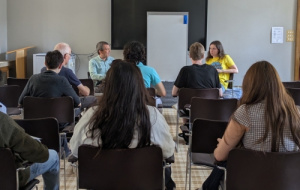 One of the most persistent misconceptions about widening participation is that it involves favouring students from some schools at the expense of those from others. In reality, the situation is far more nuanced.
Educational disadvantage does not map neatly onto school type. Some independent school students have had very disrupted personal journeys through education, while some state schools offer extensive support for applications. Widening participation work therefore accounts for a range of factors, including income, geography and personal circumstances, rather than relying on simple categories such as school type. Crucially, our approach to widening participation is one in which we ask, “how might this student perform academically at Oxford if they had the chance?”
A broader landscape of inequality
Behind individual experiences lie deeper, systemic issues: disparities in school resources and disparities in educational opportunities between communities. Outreach work highlights striking differences between schools, even within the same regions. Some cannot offer subjects like history or modern languages at GCSE; others lack functioning libraries. Funding pressures, staff shortages and curriculum cuts limit what students can study – and, in turn, what they feel able to pursue at university. Likewise, unequal access to academic enrichment opportunities beyond the school curriculum can limit the ideas and skills to which a student is exposed and the pathways they are encouraged to consider.
Building partnerships through link regions
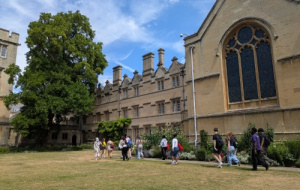 A central element of Univ’s outreach strategy is its work within designated “link regions” – areas assigned to each Oxford and Cambridge college in order to ensure that every school in the UK has a link. Univ works primarily with schools in Staffordshire, Shropshire and parts of Berkshire, focusing particularly on the pockets of deprivation seen in urban areas such as Stoke-on-Trent and Telford.
These partnerships allow for sustained engagement. Outreach may involve visits, workshops in schools or subject-specific study days. Financial support, including help with transport costs, ensures that participation is possible for schools with limited resources.
Opportunity Oxford
Among Univ’s most influential initiatives is “Opportunity Oxford”, a bridging programme pioneered at the College as “The Opportunity Programme” and later adopted across the University. Launched in 2016 with just ten students, it had grown to support the successful admission of over 300 young people per year by 2025 through the “Opportunity Oxford” programme. Designed to support making offers to students from underrepresented and disadvantaged backgrounds, it provides a sustained contact programme of online classes and a one-week residential course before term begins.
Participants receive academic preparation – covering essay writing, tutorials and expectations – as well as opportunities to build friendships. Importantly, they return home after the programme before starting university, allowing time to reflect and prepare.
The benefits extend beyond participants themselves. The programme gives admissions tutors greater confidence to offer places to applicants who show potential but may lack certain educational advantages. In effect, it creates additional flexibility within the admissions system – broadening access without displacing existing places.
Open Days
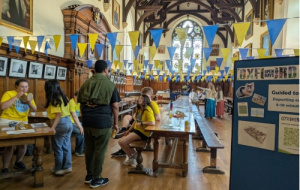 Large-scale events like University of Oxford open days also play a vital role. Welcoming thousands of visitors each year, Univ offers prospective students the chance to tour the College, attend demonstration interviews and speak directly with tutors and current students. These experiences demystify the admissions process and challenge perceptions of Oxford as inaccessible.
Our Student Ambassadors are central to this work. Trained but encouraged to speak honestly, they share their experiences authentically rather than “selling” the College. Their enthusiasm is often rooted in genuine satisfaction with the College, making their interactions particularly effective.
Digital outreach and the Staircase12 initiative
Outreach increasingly extends beyond physical visits. Univ’s Staircase12 platform, named after the College staircase where the outreach team was originally based, provides online resources for students aged 14–18, helping them explore subjects beyond the school curriculum.
The Staircase12 social media presence complements this by sharing opportunities not only at Oxford but across the UK, including competitions, grants and local initiatives. This broader focus ensures that students receive practical, relevant information regardless of their eventual university destination.
Such efforts are especially important in an era of online misinformation. Forums and social platforms often circulate inaccurate advice about university admissions. Clear, accessible guidance can help students navigate these spaces and make informed decisions.
Small interventions
Not all initiatives are large in scale. Some of the most effective are simple. Our “book box” project, for example, provides curated reading materials to schools without libraries. Recommended by Univ students and tutors, these books help students engage with subjects more deeply and develop critical thinking skills.
Support from our alumni and friends also enables practical interventions, from covering transport costs to improving outreach materials. These contributions, however modest, make a tangible difference to our wider support network.
The bigger picture
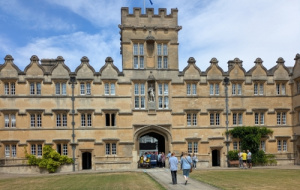 Ultimately, widening participation is about more than shifting statistics or increasing application numbers. It is about ensuring that talent – wherever it is found – has the opportunity to flourish.
The challenge remains significant. Structural inequalities in education cannot be solved by outreach alone, and lasting change requires sustained investment in schools and communities. Yet the work at Univ demonstrates what is possible when institutions commit to addressing these disparities.
The goal is not simply to bring more students to Oxford, but to ensure that all students have the chance to think critically, explore their interests and access a high-quality education. In that sense, widening participation is not just about opening doors – it is about equipping the most talented and deserving with the educational experience that can change lives.
You can get in touch with Savannah via email Savannah.Phillips@univ.ox.ac.uk – Find out more about applying to Univ.
Published: 20 August 2026
This feature was first published in Issue 18 of The Martlet; read the full magazine here or explore our back catalogue of Martlets below:




Explore Univ on social media