Prestigious Fellowships for three Univ members
Three members of the College community have been recognised with fellowships in highly-distinguished societies relating to their academic fields.
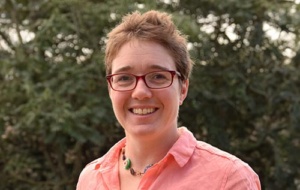
Professor Charlotte Deane
Professor Charlotte Deane MBE (1993, Chemistry), Professor of Structural Bioinformatics in the Department of Statistics, University of Oxford, Fellow of St Anne’s College, Oxford and Executive Chair of the Engineering and Physical Sciences Research Council, has been elected a Fellow of the Royal Society.
Founded in 1660, the Royal Society is the UK’s national academy of sciences and the oldest scientific academy in continuous existence. Previous notable Fellows include Isaac Newton, Charles Darwin, Albert Einstein, Dorothy Hodgkin, Alan Turing and Stephen Hawking.
Professor Deane, who leads the Oxford Protein Informatics Group (OPIG), is recognised for her pioneering work at the intersection of artificial intelligence and biology. Her research develops computational methods to advance understanding of protein evolution, interaction, structure and function, with applications spanning immunoinformatics, protein structure and small molecule drug discovery. Under her leadership, OPIG has developed tools, algorithms and databases that are widely used across academia and industry and openly available to the scientific community. These resources contribute to pharmaceutical drug discovery pipelines, supporting ongoing research into antibodies, proteins, drugs and their interactions.
During the COVID-19 pandemic, Professor Deane was involved in advising the UK Government on the Scientific Advisory Group for Emergencies (SAGE) as well as taking on the role of UK Research and Innovation COVID-19 Response Director. In 2022, she was awarded an MBE for services to COVID-19 research.
Professor Deane said, “I really appreciate this honour. I know that this would never have happened without the brilliant and inspiring students, postdocs, and colleagues who I have worked with, and I am very grateful to them.”
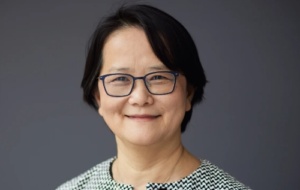
Professor Tao Dong
Professor Tao Dong, Supernumerary Fellow in Medicine at Univ, Professor of Immunology and Director of the Chinese Academy of Medical Sciences (CAMS) Oxford Institute, has been elected as a Fellow of the Academy of Medical Sciences. The fellowship recognises her significant contributions to advancing medical science through discovery research, translational studies, and the application of scientific knowledge for the benefit of patients and the public.
Professor Dong’s research focuses on how T-cells contribute to protection against disease and the way in which diseases originate, develop and progress. This work has important implications for patient outcomes, vaccine design and novel therapeutics. Her group works to investigate and identify pathways to augment and control the immune response by combining functional data with multi-omic single cell and T cell receptor (TCR) repertoire analysis, with the aim of improving outcomes related to human diseases such as SARS-CoV-2 (COVID-19), influenza, Monkeypox virus infection and cancer. During the COVID-19 pandemic, Professor Dong’s team analysed patient samples in order to examine differences in T cell response to the infection, informing the understanding of COVID-19 and subsequent approaches to vaccination and treatment.
Professor Dong said: “I am honoured to have been elected as a Fellow of the Academy of Medical Sciences. Credit goes to the wonderful members of my group, past and present, as well as my mentors and collaborators, the wonderful research environment provided by the Nuffield Department of Medicine and the Weatherall Institute of Molecular Medicine.”
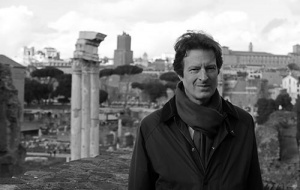
Professor Nicholas Halmi
Professor Nicholas Halmi, Margaret Candfield Tutorial Fellow in English at Univ and Professor of English and Comparative Literature, has been elected a Fellow of the Royal Historical Society in recognition of his original contribution to historical scholarship.
Founded in 1868, The Royal Historical Society is the UK’s leading organisation for the study of history and is made up of historians from around the world. Society members come from a range of backgrounds and include academics, curators, librarians, heritage specialists, independent researchers and writers. The Society’s work spans policy, advocacy, publishing, academic events, professional engagement and the recognition of excellence through awards and prizes.
Professor Halmi’s research focuses primarily on British and European literature, philosophy, and visual arts from the mid-17th to mid-19th century, particularly in their responses to the challenges of modernity and their relation to the historical past. His current work examines transformations in the understanding of time, particularly historical time, from around the 16th to the 19th century.
Published: 11 June 2026
Explore Univ on social media