Archival research in the US
 Old Members’ Trust Graduate Conference and Academic Travel Fund report – Ben Willis (2023, DPhil History)
The purpose of my travel was to consult papers held in several archives in the United States, which proved extremely important and useful for my research on nineteenth-century American political culture and, in particular, how historical actors imagined time.
The first stop on my research trip was Washington, D.C., where I spent several days examining the papers of a number of Democratic Party politicians, including, among others, William Allen and William L Marcy. These materials are housed in the Library of Congress’ James Madison Building. There is something uniquely exciting about archival work, especially when one encounters material that deeply humanises historical subjects.
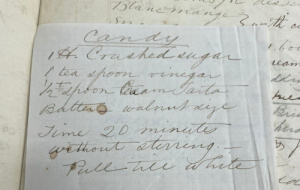 In one instance, I discovered a walnut brittle recipe (which I plan to try) tucked into the personal papers of a politician. Elsewhere, in the diary of Anne Sanders, the wife of a Democratic operative, I was moved by her simple yet affecting description of her grief following her mother’s death. Explaining the week long silence in her diary, she wrote: “I have never experienced anything so painful in my life as my poor mother’s death.” Such moments help transform the figures we study from abstract political actors into people who lived, felt, and experienced.
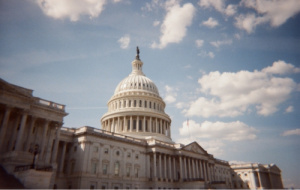
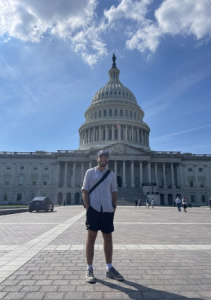 Outside the archive in Washington, D.C., I was able to visit the Capitol and observe proceedings from the galleries of both the Senate and the House of Representatives. In the Senate, I watched senators milling around shortly after failing to pass legislation to fund the government. I also visited many of the memorials and museums along the National Mall, including the Lincoln Memorial, whose scale, symbolism, and inscriptions offered a powerful reminder of the enduring presence of the nineteenth century in American political life.
I travelled between Washington, D.C., New York, and Boston by Amtrak, which provided a valuable sense of geographical continuity along the eastern seaboard and reinforced the interconnectedness of the places, institutions, and archives central to my research. In Boston, I conducted research at the Massachusetts Historical Society, where my interest in the politician-historian George Bancroft was gently mocked by an archivist. Beyond the archive, I walked the Freedom Trail, climbed the Bunker Hill Monument, and enjoyed engaging with the city’s carefully preserved historicity, which foregrounds the revolutionary and early national past in the urban landscape. Boston proved to be a warm and welcoming city.
I cannot overstate the value of this research trip. In the Washington, D.C., archives alone, I uncovered material that inspired a new chapter of my thesis, and I returned from the United States with a far deeper appreciation for both the nation and the people I study. This trip would not have been possible without the generous support of the Old Members Travel Fund.
Published: 10 April 2026
Explore Univ on social media