Profile: Lauren Dogaer
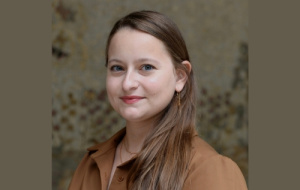
Lauren Dogaer
Lauren Dogaer is Lady Wallis Budge Junior Research Fellow in Egyptology at Univ and creator of the Drunk on History podcast.
What brought you to Univ?
I am the current Lady Wallis Budge Junior Research Fellow in Egyptology, a fellowship that is specifically associated with Univ. Originally from Belgium, I completed my undergraduate and master’s degrees there before moving to Switzerland for my PhD. Before arriving, I had never been to Oxford and was not at all familiar with the college system. However, Univ proved to be an incredibly welcoming and stimulating environment. I thoroughly enjoy being a JRF here and being part of the College community. The warmth of the College made me quickly forget how unfamiliar Oxford initially felt, and I immediately felt at home.
What attracted you to Egyptology?
I have always been fascinated by history and knew from the age of 12 that I wanted to become a historian. Once I began my studies, I quickly realised that ancient history, and Egyptology in particular, was where my interests lay. My research focuses on the Graeco-Roman period of Egyptian history (3rd century BCE – 3rd century CE). What fascinates me most is the multicultural and multilingual nature of this society. We have a wealth of documentary papyri written in both Demotic, a late stage of the Egyptian language written in a highly cursive script, and Greek. These texts allow us to reconstruct the everyday lives of people living in Egypt at the time, including Greeks, Egyptians, and individuals who moved between or embraced both identities.
What is your current field of research and what excites you about it?
My research focuses on the papyrus archives of Theban mortuary priests who worked in the necropolis of modern-day Luxor during the Ptolemaic period (332–30 BCE). These priests were responsible not only for mummifying the deceased but also for maintaining the mortuary cult by performing rituals and pouring water libations at tombs, often for as long as the deceased’s family continued to pay for these services. Their archives, written in both Demotic and Greek, reveal a remarkably detailed record-keeping system. They tracked which mummies they were responsible for and documented how rights associated with particular burials could be sold, leased, or inherited. Because these rights represented a source of income, disputes frequently arose, and the priests sometimes took one another to court. It’s hard not to be intrigued by ancient Egyptian priests arguing over mummies! The mummy lists preserved in these archives are also invaluable for reconstructing burial patterns within the Theban necropolis. My current project uses this material to better understand who was buried where and how the necropolis developed during the Ptolemaic period.
How did you come to create the Drunk On History podcast?
One of the papyri from the Theban mortuary priests discusses a religious association to which the priests belonged. As was common across the wider Graeco-Roman world, members gathered regularly to drink wine together in honour of the deity they served. The papyrus records these “drinking days” alongside a surprisingly detailed set of rules governing the gatherings. Priests who broke the rules could even be fined. One regulation specifies the maximum number of jugs of wine that participants were allowed to consume during a banquet. This sparked my curiosity about alcohol consumption and attempts to regulate it in ancient societies more broadly. That curiosity eventually led to the creation of Drunk On History, a podcast that explores drinking culture and alcohol-related practices throughout history.
What do you enjoy most about life at Univ?
I live in Stavertonia at Univ North, and I love living there. My living room overlooks a tree that seems to be permanently occupied by squirrels, which provides endless entertainment. I also enjoy spending time at the main College site for lunch and occasionally dinner. One of the best aspects of College life is the opportunity to interact with fellows from completely different disciplines, whether in the sciences, social sciences, or humanities. Those conversations often lead to unexpected perspectives and lively discussions. And, of course, I am very fond of taking the occasional break in our beautiful Senior Common Room. Even now, there are moments when I walk into College and find it hard to believe that I actually work here.
What do you outside of academic life?
I am a very creative person and enjoy painting, drawing, and various other crafts, as well as dancing, including ballet and contemporary. I also love visiting historic and archaeological sites, and museum collections whenever I can. And, every now and then, I make an effort to read a book that has absolutely nothing to do with ancient Egypt.
Describe Univ in three words.
Friendly, historic, inspiring.
Published: 2 July 2026
Explore Univ on social media