Profile: Colin Ford CBE
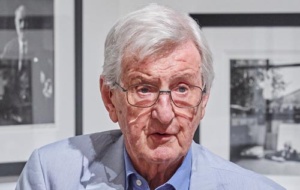
Colin Ford CBE
Portrait of a Curator
Colin Ford, CBE (1952, English) is one of the world’s leading photographic historians.
Colin spent his life curating photography at some of the best-known museums in the world. He was the first curator of photography and film at the National Portrait Gallery and founded what was then called The National Museum of Photography, Film and Television in Bradford. We explore his career and relationship with Univ further here.
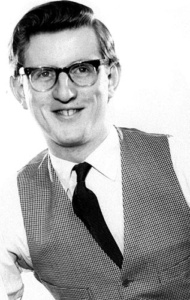
Colin Ford – early headshot
How did going to Univ help you to develop?
During my time, one typically went to Oxford to become an academic. Although some have called me an academic because of my career, I don’t really claim to be one. What I did at Univ was grow up. Having come from a school where you were kept firmly in your place, Univ allowed me to grow and to better understand the world.
What did you do immediately after leaving Univ?
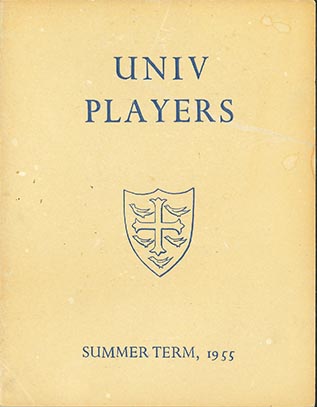
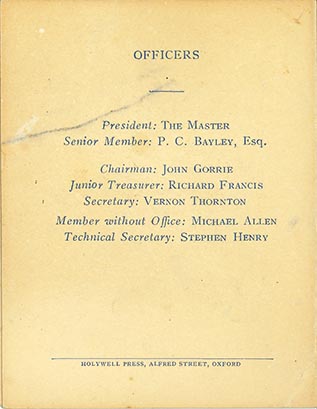
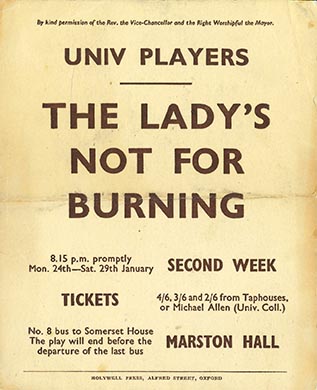
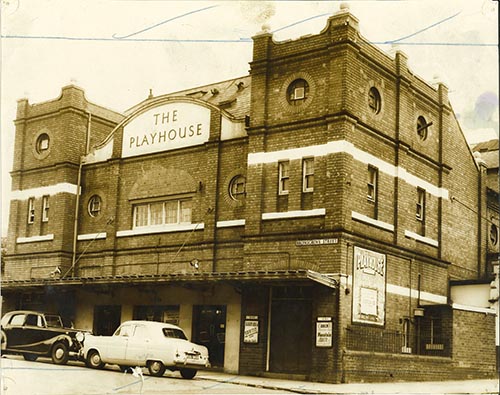
Having directed two plays for Univ Players (one of which we took to the Edinburgh Fringe), I set my sights on making a career in the theatre. After going down, I took a job doing the lighting for a small professional repertory theatre in north London. A few months later, I became Manager and Producer of Kidderminster Playhouse, claiming to be the youngest person in such a post in Britain. Theatre – in various forms – has figured in my working and private life ever since.
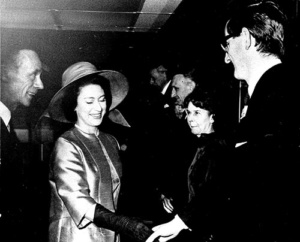
Colin Ford as Deputy Curator of the National Film Archive with Princess Margaret (National Film Theatre)
How did you first become involved in photographic history?
In the 1960s while Deputy Curator of the National Film Archive, I met Roy Strong (later Sir Roy Strong), who was then Director of the National Portrait Gallery. I asked him why they weren’t showing any film at the Gallery, and he told me that they hadn’t yet done photography either! We spoke about the matter, and two or three years later he wrote to me and said he had secured funding for the project and asked me to interview to be the curator of the Gallery’s first photography collection. At that point, I didn’t really know anything about photography! When I got the post, I became the first curator of photography in any British national museum or gallery Before my arrival, there was only one photograph in the entire permanent collection. It was of Mrs Beeton, author of the hugely successful and best-selling Book of Household Management; no painting or drawing of her could be identified.
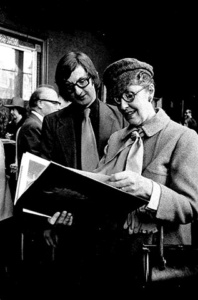
Colin Ford with Joyce Grenfell, with the first of his three Julia Margaret Cameron books, The Cameron Collection
What was the early focus of your career?
Soon after I began at the National Portrait Gallery (NPG), and still knowing very little about the history of photography, I learned about two great pioneers, the Scotsmen David Octavius Hill and Robert Adamson. In 1848, when photography was only about a decade old, they had presented 258 of their 1500 pictures to the Royal Academy of Arts. In 1972, when the RA decided to send them to auction to raise funds, an anonymous donor purchased them for the NPG. Three years later, I learned about an even greater Victorian portraitist, Julia Margaret Cameron – now probably the most written about photographer in the world. When one of her albums was put up for sale, I had it banned from export and led the first public campaign to buy historic photographs for the nation (both firsts). After three decades of compilation by me, the catalogue raisonné of her work, the first ever of a photographer, was published in 2003.
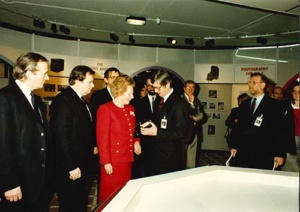
Colin Ford with Margaret Thatcher at the National Museum of Photography, Film and Television in Bradford (now The National Science and Media Museum)
Why did you leave the National Portrait Gallery?
During my time there, it became clear to me that there ought to be a national museum of photography. I campaigned for it for a long time and was helped by then director of the Science Museum, Dame Margaret Weston, who set up a committee to create the museum. To cut a long story short, in June 1982 we opened what was then called the National Museum of Photography, Film and Television. It became the most highly attended museum outside of London.
Where did you go after the National Museum of Photography, Film and Television?
I was recruited for the position of Director of the ten National Museums and Galleries of Wales. Thanks to this I can honestly claim that I have directed more British national museums than anyone else in history. Photography was only a small part of the job, but I never lost my taste for it. During my tenure, American photographer Annie Leibovitz held her first British exhibition at one of the museums.
How has philanthropy been a part of your life?
I became the Vice Chairman of the Julia Margaret Cameron Trust, which operates Cameron’s former home on the Isle of Wight. I led the public campaign to raise the funds to save the home from destruction. It may be that I have always concentrated on individual photographers more than is strictly necessary, but I believed it was essential to save this home and its history.
Who is your favourite photographer?
For me, the late Hungarian André Kertész still stands as one of the greatest photographers in the world. I didn’t know it at the start of my career, but Hungarians played a huge part in world photography. In the 1930s, the British Journal of Photography listed the hundred greatest photographers in the world and eight of them were Hungarian. I was lucky enough to be able to interview Kertész in New York as part of my work on his career.
Would you still like to be working in photography now?
Nowadays, how do you sort out which are the good photographs, which are the preservable photographs? The latest figure is that 3,000,000,000 photographs are taken in the world every day. How do you find the good ones? How do you find the great ones? How do you build up a collection? I am relieved – even, dare I say it – pleased to be out of that.
Why have you supported Univ?
Univ was the first Oxford College to come up with a financial scheme to help those applicants who didn’t have the sort of money needed to get to Oxford. I came from a family that couldn’t support me, and I had to work during the vacations. So, I felt personally that one ought to have the money to be able to study at Univ.
How have you been in touch with the College recently?
I was able to come to the Univ 775 Festival last September and loved it. I was extremely lucky on the day when I wandered into the Master’s Garden. She took me and my wife under her wing and showed us some of the extraordinary mementoes she has acquired during her amazing career. It was a wonderful weekend.
Describe Univ in three words.
Civilised, expanding and welcoming.
Gallery





Published: 25 March 2025
Explore Univ on social media