Global Conversation: International Law
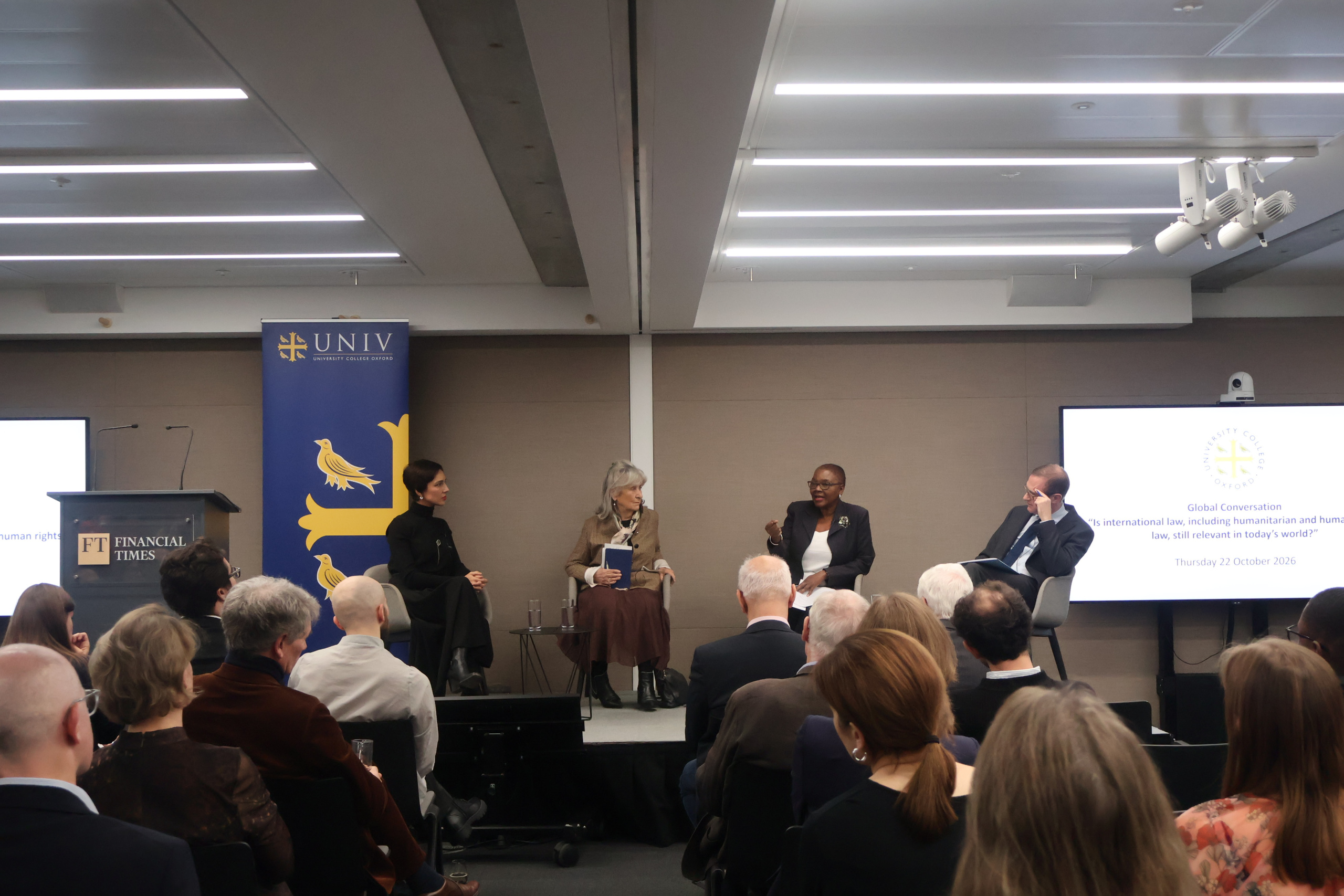
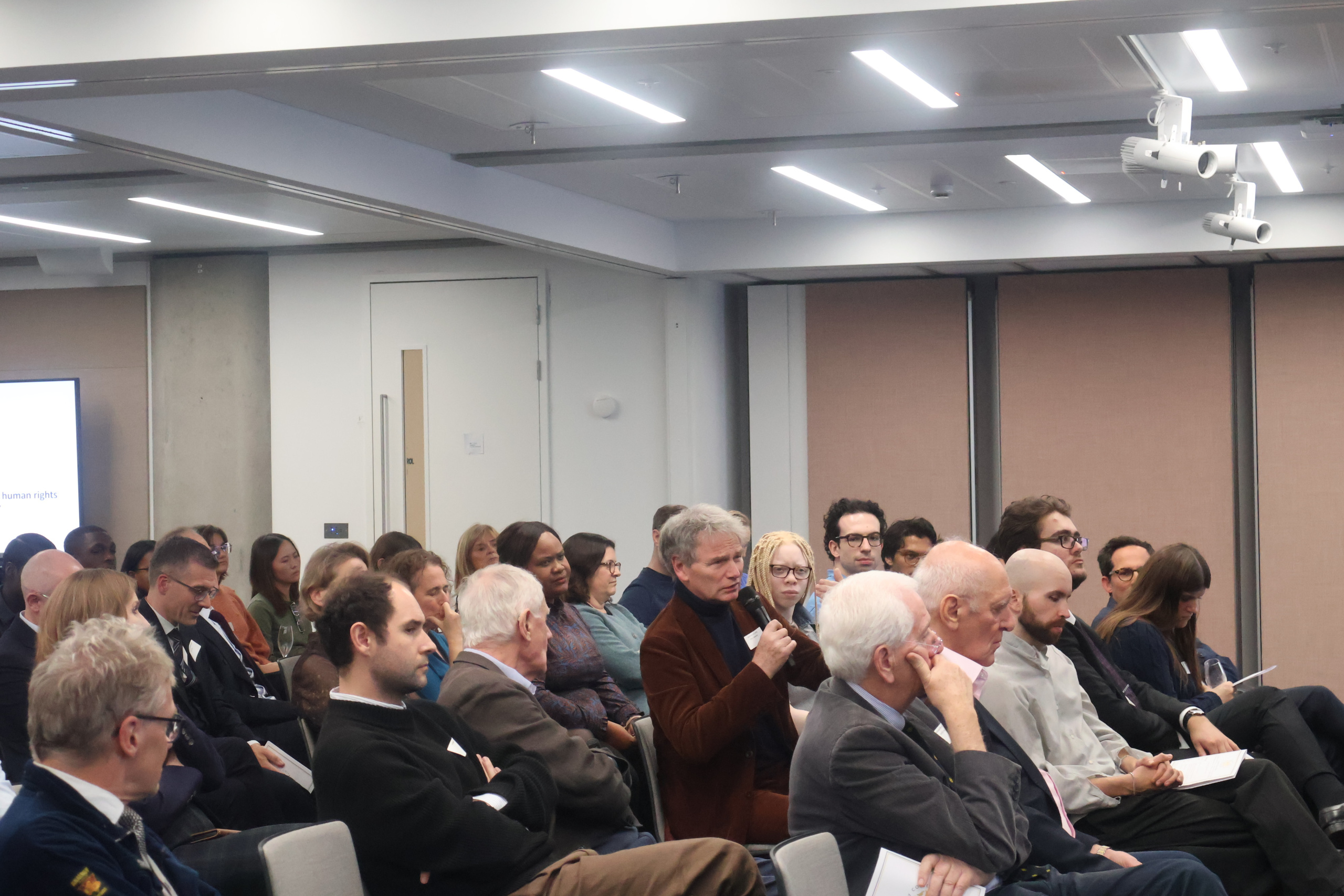
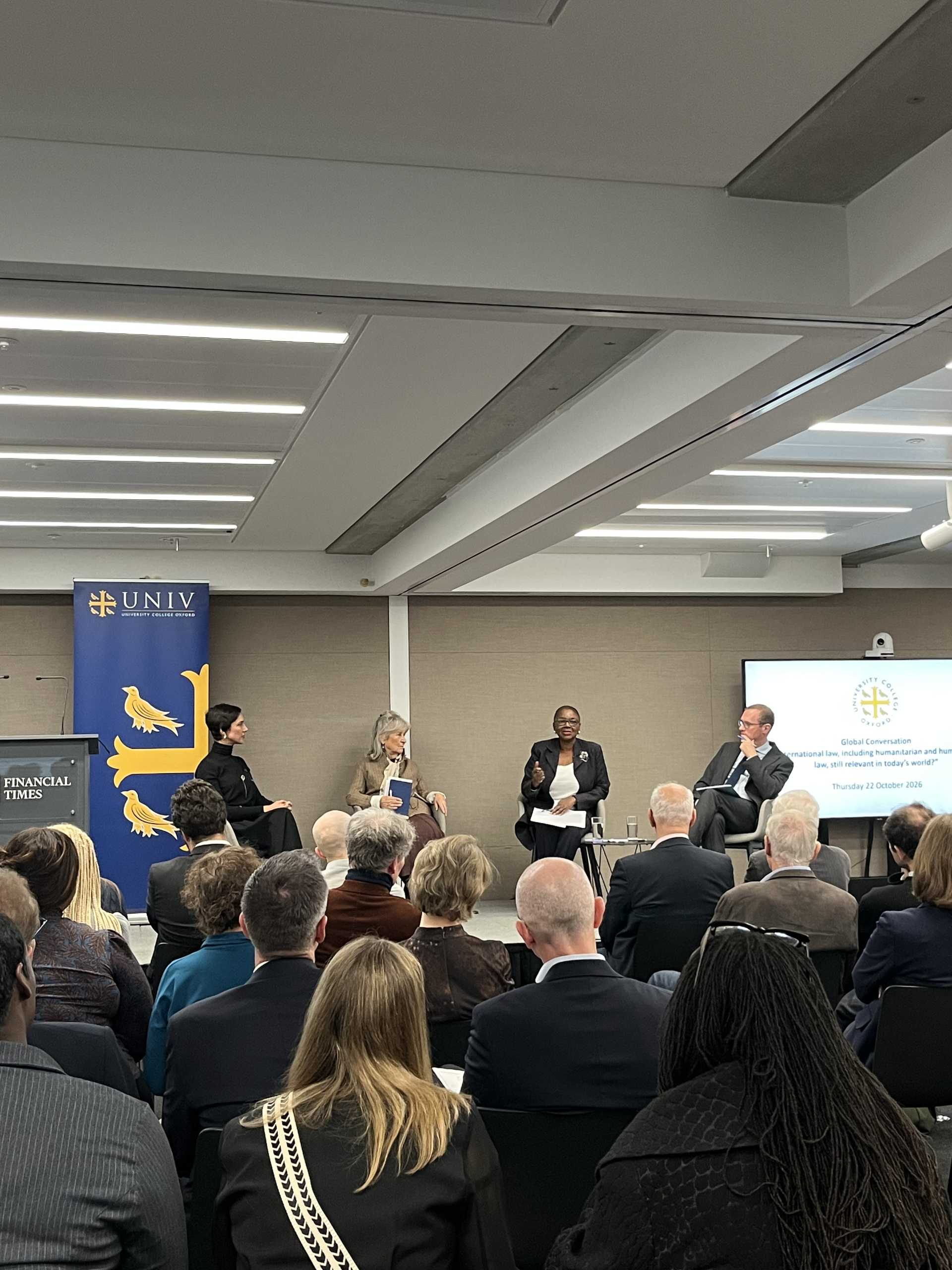
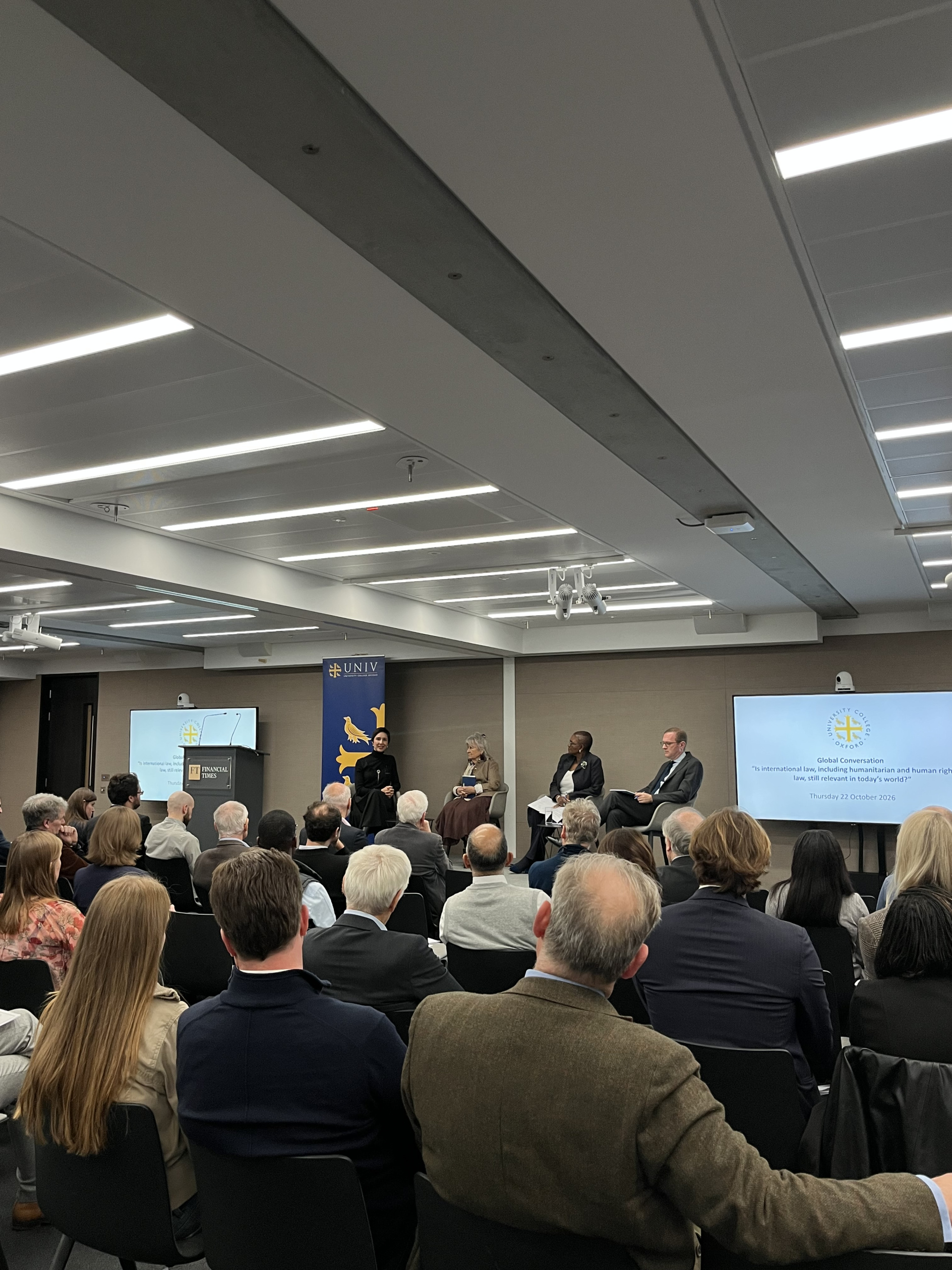
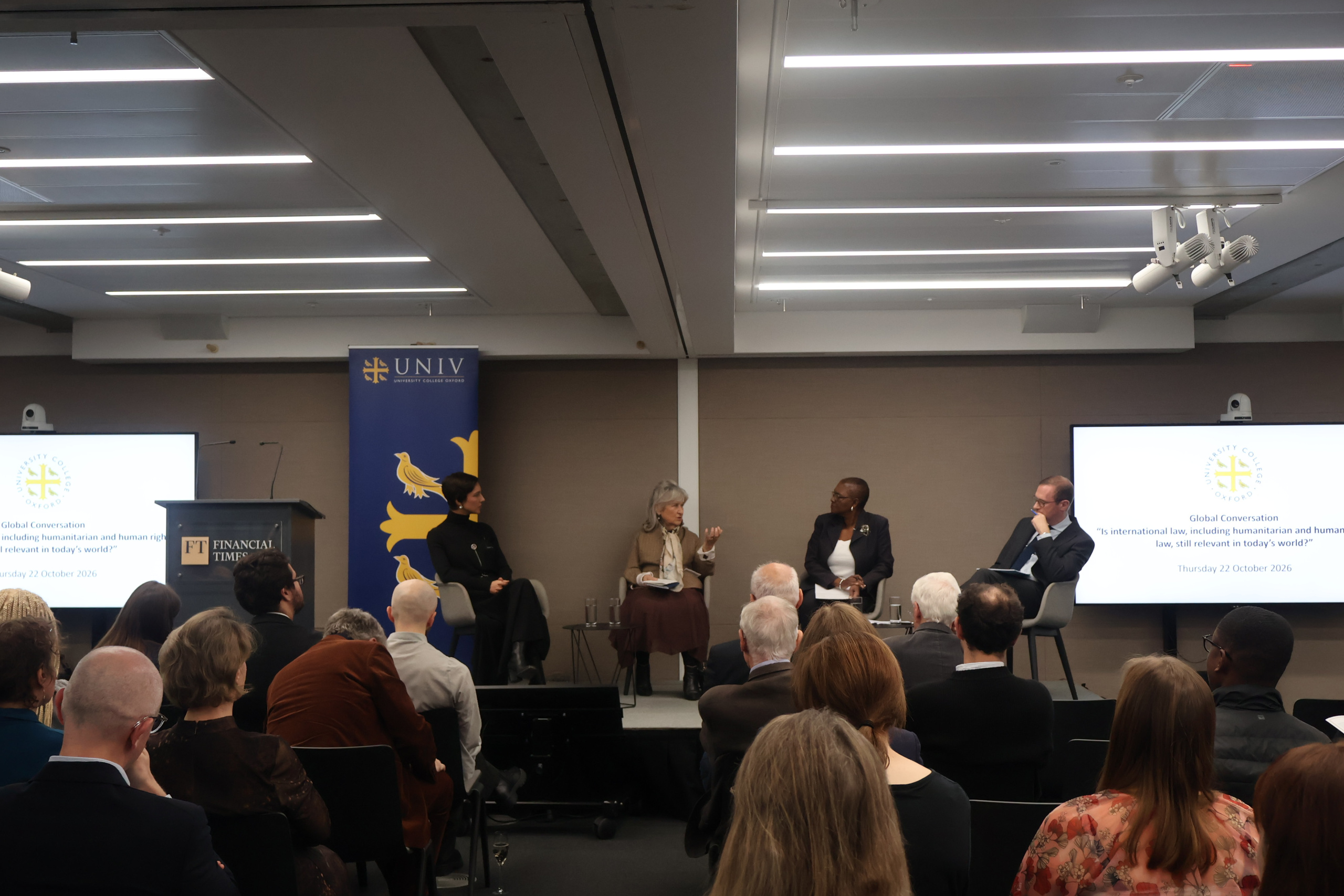
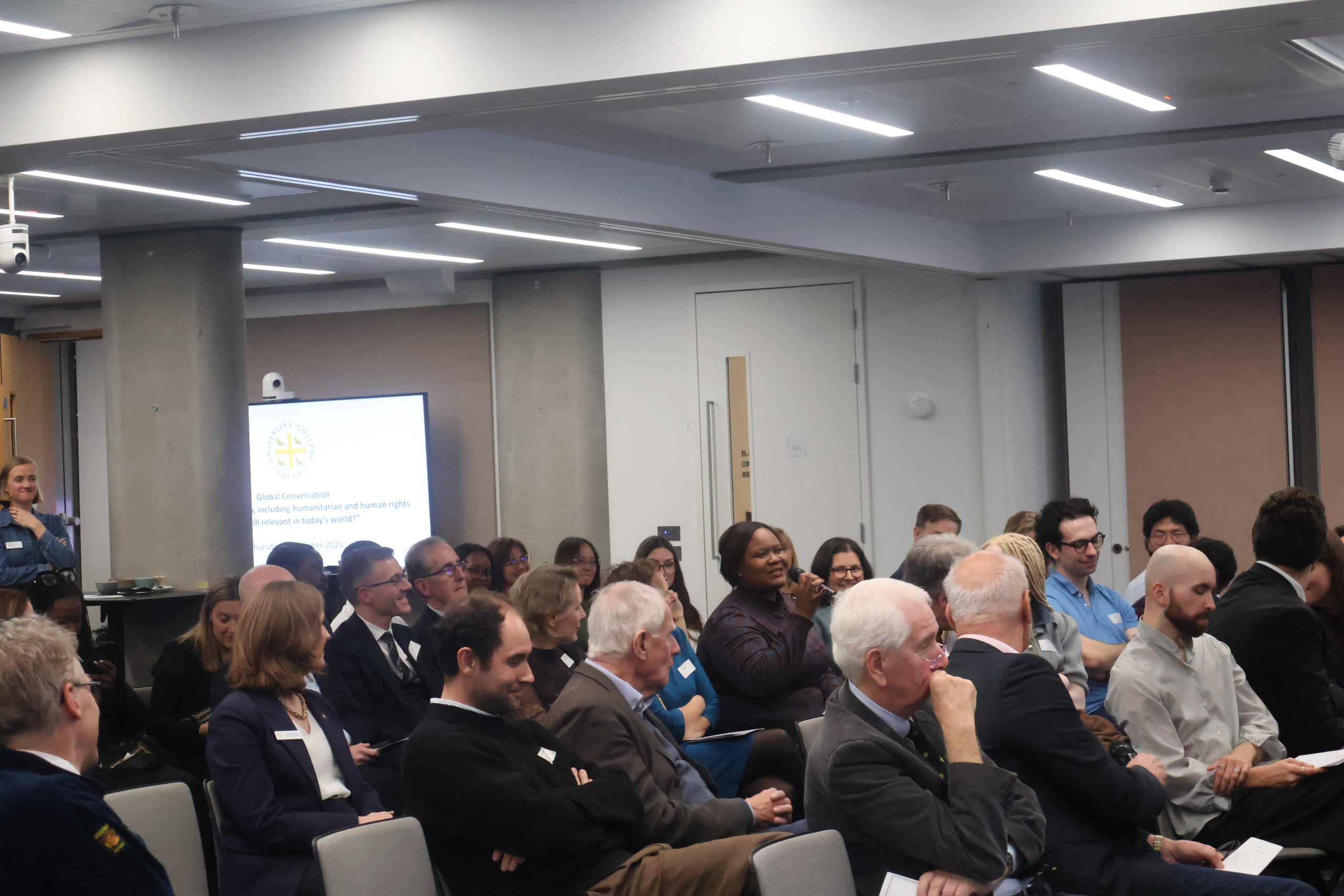
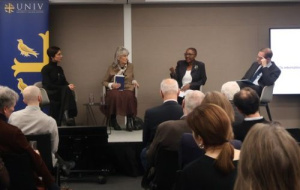 The College’s Global Conversation on International Law on Thursday 22 October 2026 brought together an outstanding panel and an engaged audience to explore the question: “Is international law, including humanitarian and human rights law, still relevant in today’s world?”
Chaired by Baroness Amos LG CH PC, the panel featured Baroness Helena Kennedy of The Shaws KC, Sir Martin Chamberlain and Dr Mishana A. Hoss. The event was held at the Financial Times Building, Bracken House in London and was kindly supported by John Ridding (1984, PPE) Honorary Chair and former CEO of the Financial Times.
Seán Lang (1979, History) has kindly provided the following reflections on the event.
The postwar world was born in the hope that the future would be more peaceful because the nations of the world committed themselves to be bound by the rule of law. Now, with Russian troops still occupying large parts of Ukraine, American forces still locked in conflict with Iran, the conflict in Gaza still flaring up, and the Trump Administration actually sanctioning the members of the International Criminal Court (ICC), whose authority, despite having been the prime mover in creating its prototype, the Nuremberg Tribunal, the United States has never recognised, anyone could be forgiven for thinking the age of belief in International Law is well and truly dead.
But is it? That was the question the panel addressed. Baroness Helena Kennedy spoke passionately about the importance of international law, especially in protecting the rights of individuals against abuse by states; Sir Martin Chamberlain, a High Court Judge with experience of the European Court of Human Rights, gave insight into the practicalities of pursuing heads of state through the courts and why, futile though it might sometimes seem, it is well worth doing. From Dr Mishana A. Hoss we heard how the ICC has managed to move away from its early image of western lawyers prosecuting African leaders into a much wider and more inclusive approach, though the days when the superpowers need fear it still seem far off.
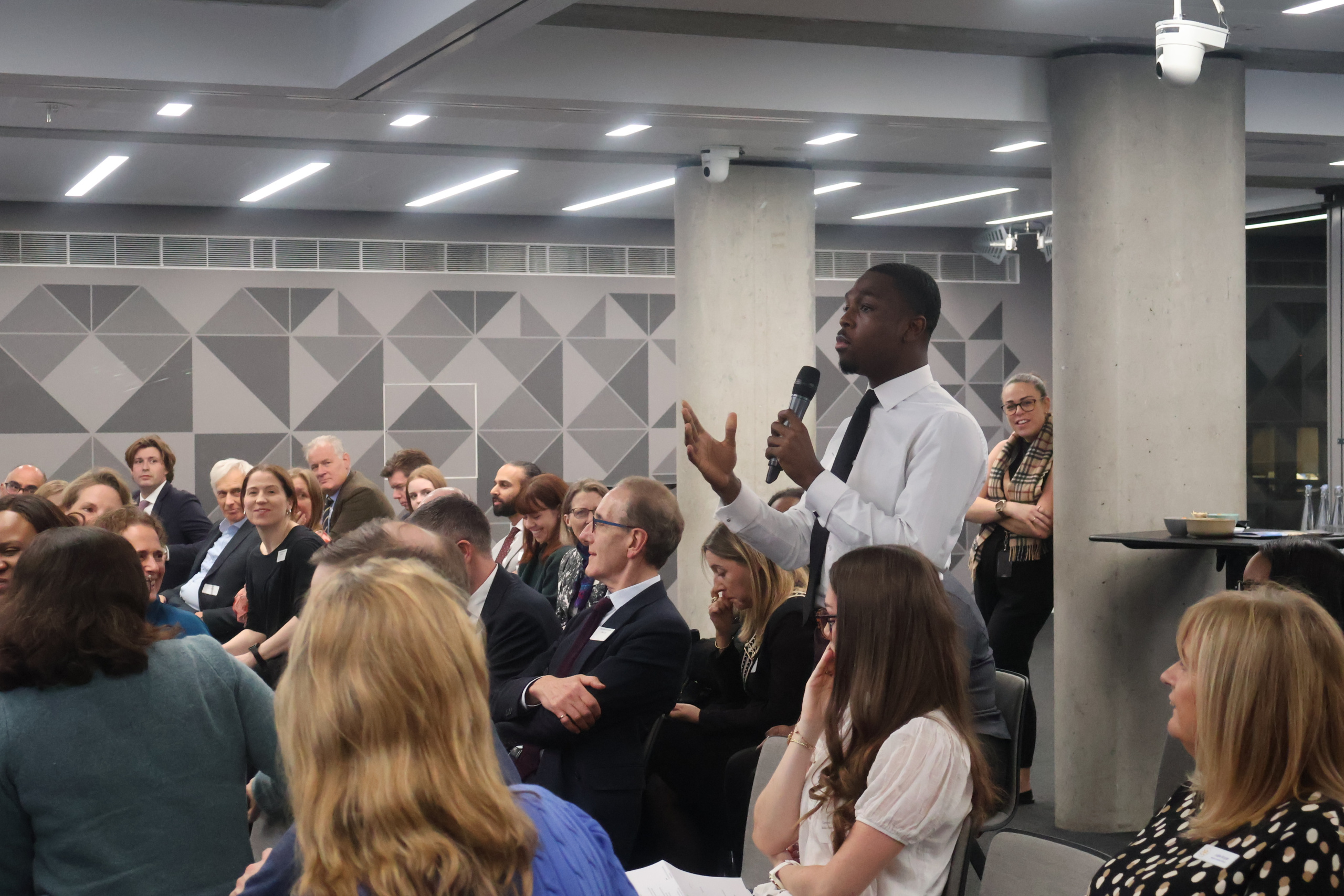
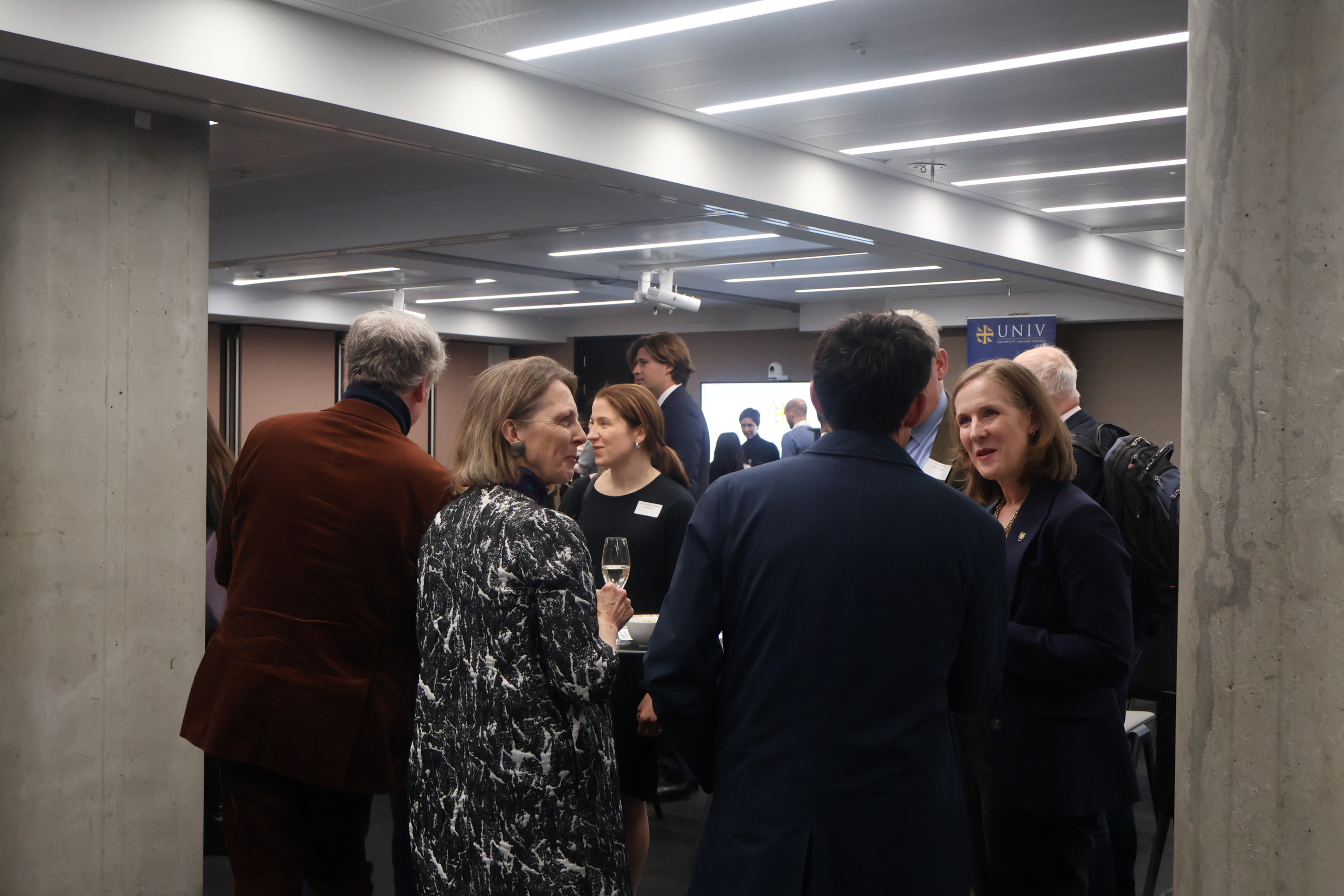
Overall, the message was not entirely cheering: international law is not in a happy state and the obstacles its believers face in the modern age are formidable. But I came away with a strengthened belief that, while the rule of international law remains an ideal, it is an ideal worth maintaining and, especially, introducing to the young. It was particularly good, therefore, to meet, amidst all the Univ alumni, some of the students who have benefited from Baroness Amos’s bursaries: if the rule of law is to survive, it is young people like them who will have to strengthen it, and I hope his conversation will have helped sow that seed.
Published: 19 November 2026
Explore Univ on social media