Women and Girls in Science 2026
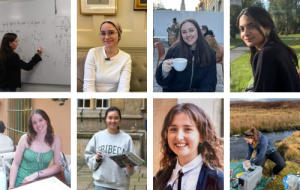 To celebrate International Day of Women and Girls in Science, which falls on Tuesday 11 February, the College interviewed an inspiring cohort of Univ’s female science undergraduate and postgraduate students.
International Day of Women and Girls in Science celebrates the contribution of women in science while also highlighting the need for science and gender equality to advance in tandem in order to effectively address current and future challenges.
Globally, women continue to be underrepresented in research, making up less than a third of all researchers. This year’s celebration focuses on closing the gender gap to redefine STEM, with participants being asked to share what would be different in their field if more women were involved in science as part of the #EveryVoiceInScience campaign. That’s just one of the questions we put to eight female Univ scientists, who are studying and conducting research across various fields, from exploring peatlands to researching neuropathic pain or delving into string theory.
Student perspectives offer such richness and diversity of thought, and we will hope you enjoy reading the insights and interests of these remarkable female scientists.
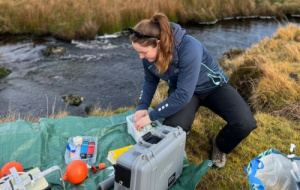
Catherine Baldwin (2023, DPhil Earth Sciences)
 What brought you to Univ?
I’m on an Oxford-Radcliffe Scholarship so it’s really thanks to the Univ Old Members who were involved there, but I’d like to think I’d have chosen Univ anyway! It’s a very welcoming college.
What drew you to your particular subject?
This specific DPhil project was heavily aligned with my academic interests, as I have always wanted to work in peatland and polar science.
What are you working on at the moment?
Right now, I’m working on a dataset that we spent over a year collecting in the Outer Hebrides, looking at how climate and land cover influence the way that peatlands lose carbon through their rivers.
What part of your research excites you the most?
That something as tiny as an atom, an isotope, can carry the fingerprint of its recent biogeochemical processing. By tracing these fingerprints, we can infer greenhouse gas sources and determine the factors that are causing peatlands to release old carbon to the atmosphere that would otherwise have remained locked away in deep soil layers. It’s like trying to solve a really complex, landscape-level puzzle and I am really enjoying that challenge.
What’s been the highlight of your academic journey so far?
Does getting into the DPhil programme at Oxford count?! Otherwise, I would have to say it is the collaboration opportunities I have had here so far and getting to do fieldwork in the Arctic.
What has been the greatest challenge?
Returning to academia after a few years in a completely unrelated field. I was an operations manager in adventure tourism before starting my DPhil, so I was nervous about jumping back into the university sphere. I have been well supported though, and I wouldn’t change anything because ultimately that path led me to where I am today.
Who inspires you in your work?
I have been lucky to have met some incredibly inspiring and adventurous women throughout my career and personal life, and I aspire to be like them!
What would be different in your field if more women were involved in science?
Young female scientists can face issues with being taken seriously, and can face more societal and personal barriers than their male counterparts in progressing to senior leadership positions in academia. Increasing diversity in all aspects increases the chances of young scientists finding role models, which, in my personal experience, has helped me to combat imposter syndrome and feel more capable.
What impact do you hope to have through your work?
Peat bogs and moorlands are often thought of as bleak, desolate landscapes, but this couldn’t be farther from the truth – they are very vibrant places if you look closely enough. I hope to contribute towards our understanding and appreciation of peatlands, and advocate for their conservation.
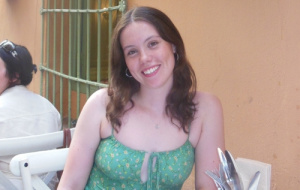
Chloe Brennan (2024, Maths)
 What brought you to Univ?
I applied to Univ as I am a keen swimmer and main site Univ is the perfect location between Iffley leisure centre and the Mathematics Department. The tutors at the open day were also super lovely and welcoming and I was toured round by a super friendly student that recommended the brunch!
What drew you to mathematics?
At school, I worked on a project exploring how mathematics is used in other areas, particularly in music. I found this fascinating, as mathematics plays a major role in harmonies, composing music, and the design of musical instruments. Mathematics is also found extensively in nature, which inspired me to learn more about it.
What are you working on or learning about at the moment?
This term I am taking two courses that continue from previous modules; Differential Equations 2m which teaches us how to solve different types of equations and Statistics, which teaches different types of probability models, estimations, and how accurate these estimations are. I am taking one new module, Fluids and Waves, where we learn about the flow of fluids without friction and one short course option called Integral Transforms, which provides methods of converting differential equations into algebraic equations that are simpler to solve.
What part of your learning excites you the most?
What excites me most is when tutors show us how areas we are learning about connect to seemingly unrelated areas of mathematics, or even more so when they have applications in real life. An example of this was when in first year in a calculus module, our tutor taught us how the model we had been learning about was the reasoning behind the concept of the “point of no return” in climate change.
What skills have you developed during your course that you didn’t expect to need?
Beyond further mathematical and problem-solving skills, I’ve developed the perseverance to sit with little progress for long periods in order to tackle some of the more difficult problems. Discussing questions and explaining solutions in tutorials has also developed my ability to clearly layout reasoning for an approach.
What would you like to do after completing your studies at Univ?
I’m really interested in the involvement of maths in medicine; this includes modelling diseases and analysing statistics to see the success of different medicines and much more. I would love to pursue this after my studies and get involved in teams that use maths to develop effective treatments, better understand complex medical problems, and contribute to improving patient outcomes.
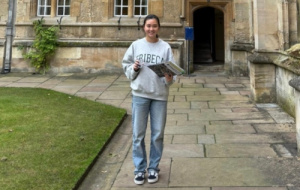
Ellice Chen (2024, Biomedical Sciences)
 What brought you to Univ?
Its central location, good food and warm sense of community.
What drew you to biomedical sciences??
I’ve always loved STEM but am particularly fascinated by the complexity of the human body and the intricate ways in which it functions. The biomedical sciences course at Oxford especially allows a lot of freedom as we get to choose our modules of study from second year onwards and has really allowed me to tailor the course to fields that I’m particularly interested in!
What are you learning about at the moment?
Too many to list but my modules this term largely involve systems physiology and pharmacology. Next term, I will be carrying out a research project in neuropathic pain in the Clinical Neurosciences Department at the JR which I’m very excited about!
What part of your learning excites you the most?
Seeing how the concepts we learn about translate into real-world contexts makes it all feel very meaningful and exciting.
What has been the greatest challenge?
Time management. Juggling the academic rigour of the course alongside extracurriculars and socialising, whilst not burning out!
Who inspires you in your studies?
Tutors, doctors and professors across the university! The sheer volume and depth of knowledge built and advanced upon over the last couple centuries, much of it here in Oxford, is incredible. And learning directly from scientists who are teaching things they themselves discovered is so inspiring.
What impact do you hope to have through your work?
Just to help people in need and hopefully improve their quality of life through healthcare, whether that be via research or as a doctor.
What would you like to do after completing your studies at Univ?
I would love to pursue a medical degree and become a doctor.
Lauryn Deaville (2022, DPhil Interdisciplinary Bioscience)
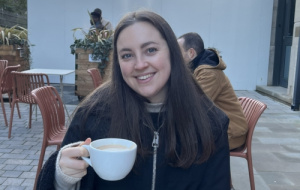 What are you working on at the moment?
I’m in the final year of my PhD studying genetics. I’m particularly interested in the very repetitive and highly variable parts of the genome where current genomics technologies tend to struggle.
What part of your research excites you the most?
I love doing something new and experimental, even when it doesn’t always work. I really enjoy that I’m constantly learning new things and trying different approaches to tackle a problem; it means there’s never a dull week!
What’s been the highlight of your academic journey so far?
I had the opportunity to do an industrial internship at Immunocore as part of my DPhil, which I absolutely loved. My background isn’t in immunology, so it was a completely different area for me, but I really enjoyed applying my skills to a new challenge and found the experience hugely motivating.
What has been the greatest challenge?
Definitely perseverance. A lot of science involves things not working, and learning to stay objective when things are stressful has been a real challenge. Figuring out what to change, what to troubleshoot, and when to give up and try a new approach has been a big part of that learning curve.
What skills have you developed during your course that you didn’t expect to need?
Computational skills! I was initially terrified of coding and convinced my future was at the lab bench, but it’s now my favourite part of my work. I’ve really enjoyed pushing myself into a much more computational role.
What inspires you in your work?
People. I’ve been lucky to work with some really incredible scientists; passionate, interesting, and also very lovely people. I find so much inspiration just from working with and talking to others who are excited about what they do.
What would you like to do after completing your studies at Univ?
I definitely want to keep being a scientist. I love the idea of doing research that can help people and of applying my skills beyond academia. I’m especially interested in healthcare or biotech, and I’m looking towards data science or bioinformatics roles in these industries.
Mariam Elantably (2024, Computer Science)
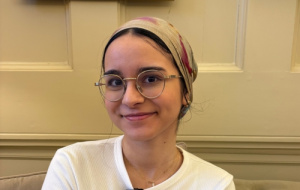 What brought you to Univ?
When I applied to the University of Oxford, I chose Univ because it had a great academic record for my subject, as well as having some really nice facilities (like an on-site gym, hall, two libraries). Univ being central was also very important to me, I love that it’s walking distance from Cowley, my department, Westgate shopping centre, and the train station!
What drew you to computer science?
I’ve always had a thing for maths, even before doing GCSEs, and problem solving was also something I really enjoyed. When I started coding, I saw how I could apply complex mathematical topics and problem-solving techniques to solve real-world problems and improve how humans interact with the world, which was something I really loved about computer science. After studying computer science at A-Level, I further saw how you could use computer science and technology to make real, tangible change, and that solidified my choice to pursue the subject.
What are you learning about at the moment?
Right now, I’m in the second year of my degree so I’m doing a mixture of required courses and options that I’ve chosen. I’m learning about artificial intelligence, compilers and how we actually translate programs, complex algorithms and how we can optimize data structures to make them more efficient, and complexity theory – the study of how quickly or slowly some problems can be solved (and whether or not some problems are solvable at all)!
What part of your learning excites you the most?
I really love the broad range of topics I get to learn about – from courses on computational biology to how we can use neural networks in different applications to quantum information theory, there is something for everyone to explore. I also really like how we get to see a mathematical intuition of a topic as opposed to just implementing code or programs, which gives us a really essential mathematical background that we can apply to any topic later on.
What’s been the highlight of your academic journey so far?
I think that Prelims (first year exams at Oxford) were definitely the highlight of my academic career so far, because they were so different to exams in secondary school, so I learnt a lot about time management, organization, and how to structure my learning – definitely a rewarding experience!
What skills have you developed during your course that you didn’t expect to need?
One of the skills I have developed in my course (that I thought I wouldn’t need) is the ability to really articulate my writing. You would think that in a very mathematical course you wouldn’t need such a skill, but we have a lot of algorithm design courses where you need to write out answers unambiguously in natural language, so we really learn to develop a clarity in the way we write.
Who inspires you in your studies?
My parents are definitely a huge inspiration for me – they’re both scientists and have always taught me to follow my dreams and never let anything get in my way, always inspiring me and my sister to try our best no matter what. They always taught me to seek out information and learn more about the world around me, so it is because of them and the sacrifices they made that I’ve been able to learn so much and come to Oxford to study.
What would be different in your field if more women were involved in science?
I think we would definitely see a lot of changes in the fields of technology and computer science, as it is one of the most underrepresented fields in terms of participation of women. For example, there would be a lot more role models to inspire young girls to go into computer science, which a lot of girls are deterred from now because they feel they would be alienated in such a male-dominated space. We could also see more tech being created to solve problems specific to women, such as to support women during pregnancy or safety apps for women living alone – women wouldn’t be an afterthought in tech but would be at the forefront of innovative technologies.
What impact do you hope to have through your work?
I hope I can create tangible change that can improve human life through my work, whether that be through making us more efficient or using technology to aid the most vulnerable members of our society. I want to be able to look back and know I’ve changed the world for the better. I also want to inspire more people from underrepresented communities to go into STEM – for example, supporting children in my home country (Egypt) to study STEM or inspiring other women to go into the fields – to ensure I can give back to the next generation of STEM students.
Lucinda Lowes (2024, Physics)
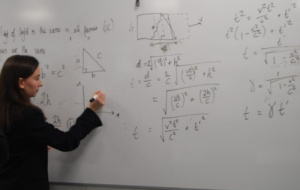 What brought you to Oxford?
When I was in high school, a student ambassador took the time to come and talk to us about Oxford. Before this point Oxford wasn’t somewhere I thought I could go to, but the talk empowered me to apply here.
What drew you to physics?
I’ve always loved asking questions. When reading Jim Al-Khalili’s The World According to Physics, I realised that physics is about asking why and how. This resonated with me, so I decided to study it further.
What are you working on or learning about at the moment?
One of the topics we are currently studying is quantum physics. I’d heard of this before but never understood what was actually happening. Now I know why theories such as quantum tunneling are predicted, and I look forward to seeing what else we will encounter.
What’s been the highlight of your academic journey so far?
Over the Christmas vacation, I went to my old high school and gave a talk on special relativity. It made me realise not only how much I’ve academically progressed, but also how my confidence has grown too. I hope that some of the students felt empowered in the same way I was a few years ago.
What has been the greatest challenge?
There is a big jump from A-Levels to university, and very quickly you realise how much you don’t know. Initially I found this hard, but now I’m excited to see what else I have to learn.
What skills have you developed during your course that you didn’t expect to need?
One skill that I have developed is resilience. Asking for and accepting help was a hard thing for me to do, but sometimes another point of view is exactly what you need for all the pieces to fall into place.
Who inspires you in your studies?
There are so many people who have inspired me to study physics that I can’t possibly name them all. These include Emmy Noether, Paul Dirac and Katherine Johnson. I am also continually inspired by the people surrounding me.
What would be different in your field if more women were involved in science?
More women in science increases the diversity of the people problem solving. Having people from a variety of backgrounds brings new perspectives, ideas and knowledge to the subject.
What impact do you hope to have through your work? What would you like to do after completing your studies at Univ?
Physics is such a broad science, I haven’t yet decided which area I would like to work in. Whenever we change topics, I seem to find a new favourite. However, this is a great problem to have, and I can’t wait to see where I end up.
Noelia Sánchez González (2023, DPhil Theoretical Physics)
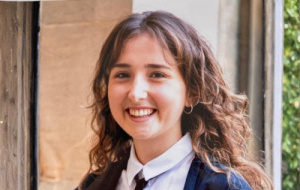 What are you working on at the moment?
My research focuses on the interplay between string theory and the early universe.
In its first minutes, the universe was extremely hot which means it had higher energies than any we can probe at any of the particle accelerators on Earth. As a result, the theories we have to describe the laws of nature, which we have developed with the experiments done so far, might not hold at those high energies. In fact, observations and questions for which we have not found an answer yet already lead us to think that’s not the case.
A possible theory that could shed some light in those first seconds is string theory. My research focuses on studying its impact on the evolution of the Universe together with its potential observational consequences. A concrete example of how this could be is through the measurement of gravitational waves, which are distortions of space and time that could have been created during those first stages, encoding information about what happened, and which could be travelling ever since, reaching us today.
What part of your research excites you the most?
I find studying the universe and the laws of nature particularly exciting because of their beauty and complexity. I think there is something fascinating about what humans have managed to unravel so far – for example, the measurement of the cosmic microwave background, light that was emitted when the universe was a few hundred thousand years old. The precision with which its inhomogeneities have been measured, allowing for the observation of the seeds that led to the formation of galaxies, is incredible. I guess what excites most about my field is how far we have come, in spite of how daunting the task is.
What’s been the highlight of your academic journey so far?
There have been many moments since arriving in Oxford when I thought it was the peak of my academic journey here. From publishing a paper as a first author, to getting an invitation to be a referee for a competitive journal or getting invited to give a plenary talk at an international conference. Being a College lecturer has also been one of the most memorable parts of my experience in Oxford so far.
However, the moment that is probably the highlight of my academic journey is when I received the fully-funded offer to do the DPhil here. At the time, I was studying a master’s in applied mathematics at the University of Cambridge, and I remember that evening I was studying with some friends in the department. The moment the email got through, I was frozen. My friends immediately started celebrating with me, and I called my family right after. This opportunity has unlocked so many others that I could not have imagined.
What has been the greatest challenge?
One of the biggest challenges I have found while doing the DPhil has been learning to trust the process. I have learned that research is non-linear. There so many hours of work where you do not see results, but that are essential to get to the final product. Frustration is part of the process towards understanding something which previously you did not. Furthermore, it is very easy to fall into comparison with others, when each project has its own struggles and advantages. Comparing yourself is not going to help with results, it is only going to make the process less enjoyable.
In my opinion, doing a DPhil puts you in a position where you have to separate your identity from “being successful” in your studies. It is a long-term race; the motivation cannot be driven only by continuous success.
Who inspires you in your work?
From the beginning, two figures that have inspired me in my work are my parents. Both how much my father enjoys learning and my mother’s strong work ethic have been key influences for me.
In addition to this, I do not think I can overestimate the impact that other women in my field have had on me. Coming across strong, assertive and creative women in my journey has inspired me a lot. In my experience, it is easy when you are in the early stages of a career to find a male-dominated field intimidating. However, when you speak to other women further ahead or at the same stage as you, and you see them in action, it breaks misconceptions one may have of what a scientist should look like.
Lastly, looking at the big picture of what I do and why I do it helps a lot when obstacles appear.
What would be different in your field if more women were involved in science?
I think diversity always has a positive impact when differences are welcomed and celebrated. It brings different ways of thinking and approaching problems, which raises the chances of finding solutions. It also leads to better scientists, as learning from different approaches to questions expands the way we think.
In my experience, women often bring to the table good communication skills, facilitating collaborations and healthier research environments. Moreover, I think the underrepresentation of women in STEM, and the consequent absence of role models, has a real impact on younger generations. However, I also think the opposite is true: a greater representation of women in STEM can help reshape expectations and aspirations in science.
What impact do you hope to have through your work?
I hope my work helps push, even if only a little, the frontiers of what we know about the universe and how it has evolved into what we observe today. I also hope my work contributes to fostering collaboration in the field and to raising new and interesting questions. Moreover, I modestly hope to inspire younger women – currently in school or in undergraduate or master’s programmes – by showing that there are no inherent limitations to doing research based on one’s gender when driven by scientific curiosity.
What would you like to do after completing your studies at Univ?
After my DPhil, I would like to continue doing research in theoretical physics while deepening my understanding of the important questions and how to tackle them. I would also like to continue teaching Physics-related courses. On the other hand, I would be interested in getting more involved with communicating science, particularly to non-specialised audiences. I believe spreading knowledge is one of the responsibilities of scientists towards society and, in addition, I enjoy taking the time to be creative and think about how to communicate these kinds of ideas.
Heli Sanghavi (2023, Medicine)
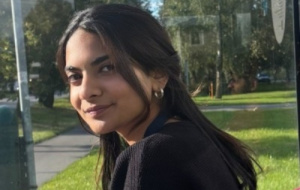 What drew you to medicine?
I always felt it was the perfect intersection of my academic interest, which was the sciences – they’re very methodical and I really liked chemistry in particular. Being able to make meaningful change is also something that drew me to medicine. It also allows me to showcase my people skills while using my scientific knowledge to make a difference in people’s lives.
What are you working on at the moment?
I’m currently in my third year working on my research project which is on validating a new neonatal neobehavioral assessment. I’m doing the statistical analysis and am currently writing the report. I’m also working on an extended essay looking at long-term impacts for childhood cancer survivors, which is really interesting.
What has been the greatest challenge of your academic journey so far?
I think working smarter, not harder, has been something I had to relearn. Every term, the bar keeps getting raised because it is a difficult course. Something that’s really important to me is having time for my hobbies and seeing friends. I’ve learned to time block and be strict with myself and say, “for the next 40 minutes, I’m really just going to focus with no distractions”. It allows me to be a lot more efficient, and then I can spend the rest of the time doing what I like to do, which means that I’m happier overall.
What would be different in your field if more women were involved in science?
One of the reasons we’re lucky to study at Oxford is that a lot of the seminal scientific discoveries have been at Oxford – at the Department of Physiology, which is just down the road, or at the Dunn School of Pathology. We learn about all of these scientific discoveries that happened so close to us, and we reference them frequently. Obviously, it’s incredibly motivating to know that people who stood in my position were part of something so big – but I do notice that a lot of those names aren’t female. It would be different if there had been more women involved in science in the past – in lectures and studies we’d be referencing female scientists and researchers. There is definitely an element of having to find where you belong, but I think that Oxford is currently doing quite a lot to combat that.
Who inspires you in your work?
My current project supervisor is an incredible woman and so motivating. She’s achieved such incredible things, so being able to work with her and hear about the incredible work that women do in my field is really inspiring, and it helps to shift that balance.
What would you like to do after completing your studies at Univ?
I’d like to practice medicine but I’m not quite sure what specialty yet. We rotate throughout specialties, starting in my fourth year, and I’m very excited to start getting some clinical exposure and going to hospitals. Being at Oxford and learning from my supervisor and tutors has exposed me to the possibility of being an academic clinician – practicing part-time and also doing research, leading clinical trials or creating assessments amongst other things. That’s something that I wouldn’t have been exposed to if I wasn’t studying at Oxford.
Mariam Elantably (2024, Computer Science) and Catherine Baldwin (2023, DPhil Earth Sciences) also took part in a Sofa Chat for International Women and Girls in Science Day to discuss their paths in science in more detail. You can watch the full video below.
Published: 10 February 2026
Explore Univ on social media