World Congress of Chemical Engineering
 Old Members’ Trust Graduate Conference and Academic Travel Fund report by Mingyu Luo (2023, DPhil Inorganic Chemistry).
Thanks to support from University College, I attended the World Congress of Chemical Engineering (WCCE) in Beijing from 14–18 July 2025 as a PhD student in the Michail Stamatakis group at Oxford. I presented a poster on my recent work using Dion–Jacobson (DJ) 2D layered perovskites for ammonia decomposition. The poster summarized why DJ structures are promising—layered geometry, tunable interfacial sites, and defect/doping strategies—and how these features shift the balance between associative and dissociative pathways for N–H activation and N–N coupling.
The poster session was lively and genuinely useful. I discussed model assumptions, stability under reaction conditions, and how to align microkinetics with operando data. Several colleagues shared practical tips on handling hindered-rotor contributions to entropy and on parameterizing KMC from DFT plus uncertainty estimates—exactly the areas I wanted feedback on. I also met experimental groups working on operando XAS/IR who are open to coordinating datasets with our calculations, and a couple of teams interested in testing DJ materials in ammonia cracking under modular, distributed H₂ scenarios. We exchanged contacts and sketched a few next steps.
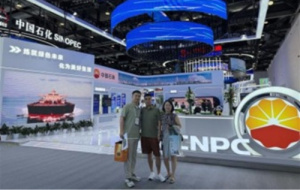 Beyond the poster, I made time to sit in on many invited and keynote talks by researchers I’ve followed for years—an academic fan moment I’ve been hoping for. I took careful notes, asked questions where I could, and stayed for the hallway conversations. Those post-talk chats were invaluable: I picked up concrete advice on framing mechanistic hypotheses, treating negative results, collaborating across theory and operando experiments, and maintaining a sustainable work–life rhythm. It was both motivating and grounding to hear how senior scientists navigate research and career choices.
Personally, the trip broadened my view of where this research fits: beyond active-site design, durability and regeneration are central, and industry cares about integration with heat management and poisoning resistance. Concretely, I’m planning (i) a stability and regeneration study for N-doped/interface-engineered DJ phases, (ii) an updated microkinetic model that treats hindered rotation consistently, and (iii) a short internal seminar to share takeaways with the group. Overall, the conference increased the visibility of our work, sharpened my research plan, and expanded my network for potential collaborations. I’m grateful for the College’s support—it made a real difference.
Published: 19 December 2025
Explore Univ on social media