Scientific Studies of Consciousness in Greece
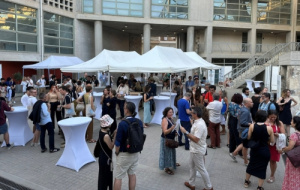 Old Members’ Trust Graduate Conference and Academic Travel Fund report by Yu-An Chen (2024, DPhil Experimental Psychology).
I am grateful to the Old Members’ Trust Graduate Conference and Academic Travel Fund for supporting my participation in this year’s 28th annual meeting of the Association of Scientific Studies of Consciousness (ASSC) in Greece. I am currently pursuing a DPhil in Experimental Psychology, with consciousness and metacognition as my main research topics, which are also central themes at the ASSC conference.
Through the talks, I learned about many of the major directions and cutting-edge findings in contemporary consciousness research, and I gained perspectives on the same issues from different disciplines such as psychology, neuroscience, and philosophy. For instance, some talks explored how electrophysiological signals from primate brains at a basic level can shed light on the neural mechanisms of binocular rivalry. Others examined how, at the level of human behavior, new experimental designs can produce subjective conscious experiences that are sometimes present and sometimes absent even with identical visual stimuli. At the theoretical level, there were debates about whether current methods are sufficient to establish the existence of unconscious perceptual processing. I also found it intriguing that there were sociological discussions of the consciousness research community itself, examining what intuitions researchers bring to the central questions of the field.
In addition to the regular academic presentations, there was a Career Panel Discussion. Since consciousness research is still a relatively young topic within psychology and neuroscience and has often been regarded with skepticism in traditional academic circles, this panel offered guidance for early-career researchers on entering academia as consciousness scholars. Such conversations about community and career are not something one can find in journal articles. Another irreplaceable part of the conference was the chance to interact directly with other scholars. I had prepared in advance the topics and researchers I wished to discuss, and I consulted them about the difficulties I am currently facing in my own work, learning about how others view these challenges. I also exchanged ideas on potential research projects and explored possibilities for collaboration that would bring together complementary expertise. For example, we discussed how novel confidence rating paradigms could address methodological issues in unconscious perception, and how combining postdictive effects with drift diffusion models might help us understand what shapes the temporal resolution of conscious experience.
As the founder of the Oxford Consciousness Group, I hope to invite external speakers beyond the university to our future events. One of my goals in attending ASSC was to build connections with outstanding scholars whom we may be able to host at Oxford.
Altogether, the cross-disciplinary insights, the career development discussions, and the academic exchanges with colleagues made this conference a truly rewarding experience. I am deeply grateful to the College for making it possible.
Published: 5 December 2025
Explore Univ on social media