Accessing archives in New Delhi
 Old Members’ Trust Graduate Conference and Academic Travel Fund report –Shubhankar Kashyap (2024, DPhil International Relations)
From mid-June to mid-July 2025, I travelled to New Delhi to access India’s national archives as part of my DPhil project. My project examines the role of international intellectual exchanges in the formation of Indian anticolonial thought in early twentieth century. Essentially, I am researching the specific ways in which Indian leaders drew upon ideas of revolution and freedom from across the world to engender a new polity. In order to consult the relevant archives for my project, I visited the two biggest state curated repositories of historical documents in India: Prime Minister’s Museum & Library, or popularly known as Nehru Museum, and the National Archives of India and Museum.
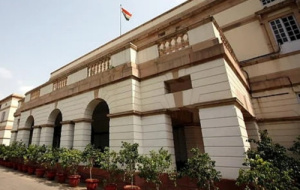
Both the archives rest in the center of Lutyens’ Delhi. The Prime Minister’s Museum & Library (PMML) was once the residence of the first prime minister of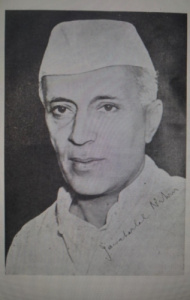 independent India, Jawaharlal Nehru. The building personifies his stature in postcolonial India. I was able to access periodicals of the early twentieth century that displayed a stark fervor of resistance against the British empire. The periodicals emphasized on philosophical, religious and political challenges that comprised the Indian anticolonial struggle. Moreover, I encountered the personal writings of many revolutionaries that included their personal memoirs and letters that they wrote to their close aides. Perusing all the material gave me a holistic understanding of what was said in the public and what was uttered in silently during moments of the liberation war. The National Archives of India and Museum (NAI) houses, comparatively more, institutional documents such as department reports and government act reviews. The documents at NAI brought into sharp relief the state response and understanding of the revolutionary activities. I realized that state officers in British India closely surveilled the movement of all activists and were quick to file legal action against them in order to pause the spread of liberatory ideas.
I am immensely grateful to University College for funding my trip. The archives are critical to my research, and I am thankful that University College entrusts me with their support.
Published: 3 October 2025
Explore Univ on social media