Profile: Natasha Edwards
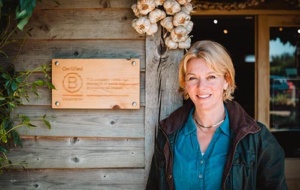
Natasha Edwards
Univ Old Member Natasha Edwards (1997, Economics) is Managing Director of The Garlic Farm, which has been growing speciality garlic on the Isle of Wight for over 50 years. The farm recently received the King’s Award for Enterprise in Sustainable Development. This prestigious award recognised The Garlic Farm’s commitment to environmentally and socially regenerative farming practices. Their farmland is certified by the Soil Association as Organic and they achieved B Corp status in 2023, joining a community of organisations dedicated to using business as a force for good. The farm employs 100 local people and offers educational outreach to schools, the general public and local businesses.
The Garlic Farm potted history
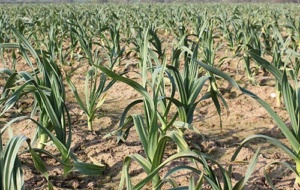 My grandparents moved to the Isle of Wight in the 1950s. They were first generation farmers who bought the farm – on the island land was cheap at the time. They set up a mixed farm and my parents joined them the 1970s, so I grew up on the farm. My grandmother had been growing garlic in the kitchen garden and saw that it grew quite well, so when my parents moved back to the farm, they started growing their first commercial crops of garlic.
The Garlic Farm became its own brand when I was at university – but the business has had a big turnaround. We had been growing sweetcorn and garlic for supermarkets, but that part of the business was sold in 1999. At that point we started selling garlic direct to the consumer from the farmhouse and that evolved into the farm becoming a specialist garlic farm, growing different varieties of garlic, creating a range of products and building a shop and restaurant.
The garlic products started with Mum making chutneys in the kitchen to sell alongside our homegrown garlic in our little stable door farm shop that was at the bottom of the house. People would ring the bell and then one of us would dash down, serve the customers and then run upstairs and say, “I took 20 pounds!” excitedly. So that’s where it started. Since then, we’ve developed lots of products with garlic in them.
When I left university, I was in and out of the business helping here and there, selling garlic at farmers’ markets and developing the product range and our holiday properties. I worked mostly abroad from graduation in 2000 to 2008, then my husband and I moved back to the island in 2014. So, I had 14 years away from the farm, but keeping a hand in and helping whenever I was around. Over that time the farm developed as a specialist garlic farm growing different varieties of garlic and developing lots of products with garlic in them.
The Garlic Farm today
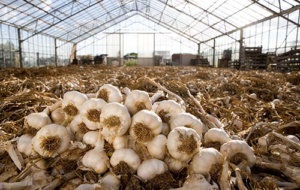 It’s still very much a family affair and we’re all involved in developing ideas. I’m Managing Director and I run the Garlic Farm side of the business with my husband, Barnes, while my brother and his wife run the holiday properties. My sister looks after the sustainability of the Garlic Farm and my parents still live in the farmhouse.
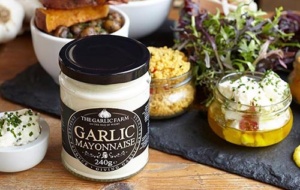
My husband and I have been back at the farm for 11 years. We employ 100 people and now have a shop, restaurant, holiday properties and about 60 products under the Garlic Farm brand. We sell garlic, smoked garlic, black garlic, chutneys, sauces, relishes and butters in our own shop and to independent retailers all over the country as well as through our website and at markets and shows.
Nowadays we have a production manager and a whole team that do daily tastings for customers in our farm shop. We’re close to our customers, and they give us feedback all the time.
We also have a garlic seed business, selling different varieties of garlic to amateur growers, and we encourage people to grow garlic at home. I have written two books about garlic, The Goodness of Garlic, 2016 and Garlic: The Mighty Bulb, 2012, with a forward by Clarissa Dickson Wright).
The business has evolved beyond family to a much bigger team with many more people involved, but very much with the family business ethos as well.
I look after the visitor side of things, making sure that that is all running smoothly. That includes the shop, the restaurant, events, any workshops that we do on site, any extra events that we are running and educational activities. I also oversee the financial side of things. The Garlic Farm is BCorp Certified* meaning that we are verified as achieving high standards of environmental and social impact. My husband looks after the off-island sales such as wholesale websites. We’ve changed our farming practices quite a lot in the last five years and he also looks after a lot of the farming side of things including taking care of our herds of cows and goats. We have become much more regenerative; our farmland is organic certified, and he’s been very much part of driving that change.
Role in the community
 Community has always been part of the ethos. Five years ago, we sat down as a family to figure out where we were going as a business and why. We decided that we needed to articulate our values more clearly. At the time B Corp certification was not very well known but we decided that it would be a good framework for pushing forward our values, articulating them and making sure that we fulfil them. It would also mean that we would get a certification which proves to our customers, suppliers and our community that we are serious about these values.
We looked at every area of our business and the impact that it was having on all our stakeholders: on our community, our suppliers, our customers and our employees. That is what the B Corp certification is measuring and although we have now achieved the certification, it is very much an ongoing process.
We have a challenge ahead of us to continue this journey of improvement, to set new targets for ourselves and to be continuously evolving and improving. The reason it took us five years to get there is because we have so many different things going on in our business. This slower transition had the benefit of bringing the whole team on board and involved a cultural shift in how we make decisions and think about the impact of those decisions. In every decision that we make, we consider people, planet, and profit – and not just profit, which is often the case in most businesses.
The impact of the pandemic
The pandemic did affect us profoundly, but it was quite interesting to find out that we had resilience because we are a diverse business. In a way, we were quite well protected. It was a bit scary at the beginning. Our tourism business obviously mothballed for quite a long time at the busiest time of the year. We had just gone through the winter and usually we are desperate to get going, for more people to come so that we can have our summer months to balance off loss in the winter months. So, closing everything felt scary.
The Government’s Furlough Scheme helped us. All our team who would have been working in the shop and the restaurant holiday properties were furloughed and we were incredibly lucky because our customers chose to buy our garlic and products online with us. We have a thriving e-commerce business, and our website sales took off during lockdown. We were sending out packages, boxes of garlic and we ended up representing other island businesses to sell their products as well because we already had our e-commerce site set up. We were selling cheese and tomatoes, and other Isle of Wight artisanal products.
 When we reopened the shop and the restaurant after lockdown that was slightly daunting having closed for quite a long time. We had two summers where people could not go abroad, or did not want to go abroad, so the Isle of Wight was inundated and extremely busy. We had two spectrums of either being completely closed or busier than we had ever been. And then the “Eat Out to Help Out” scheme launched, so the restaurant got even busier, and recruitment was a real challenge. We were lucky that our website and wholesale business managed to support our cash flow through the lockdowns; a really challenging period.
Some changes that we had to make because of social distancing have made our whole business better, so it did galvanise us into embracing changes that we probably wouldn’t have done otherwise, but which have been beneficial. We also made progress in articulating our core values during that period, and it fast forwarded our aspirations to be organic certified and to start our BCorp Certification journey.
We are doing all sorts of regenerative agriculture projects on the farm such as agroforestry, adaptive multi-paddock grazing, measuring soil health and biodiversity. We also have a WETland wastewater treatment system for all our grey water (waste water) that we produce on site.
The WETland wastewater ecosystem project was borne out of the need to find a solution to improve drainage at our visitor site. We have roughly 250,000 people visit our shop, restaurant and holiday properties every year and this creates a lot of waste water. Our site is not connected to mains drainage so we were having a lorry come to empty the tanks up to three times per week. We needed to find a better solution. Working with a specialist, we have developed an ecological, circular solution which involves all waste water travelling through a series of ponds called “swales” which are planted with a variety of plants that work to “clean” the water as it passes through. Once the water reaches the final pond it is clean and can be used for irrigation. At the same time it has created a beautiful, diverse habitat for all kinds of wildlife. It’s an incredible sight.
We are also involved in community and educational projects, such as free school visits and farm tours. Our farm is open to the public so people can come and see any of our projects for themselves.
We also communicate what we are doing through our social media and our e-mail newsletters. And then twice a year we produce a newspaper called The Garlic Press, which has long form articles about our current projects.
The Nuffield Farming Scholarship
I have been working in the business for over a decade and at times it has been intense. The business has evolved, and we have established a management structure. I felt I needed something to expand my mind a little more, and to network and connect with people outside our small Isle of Wight community. I heard about the Nuffield scholarship through the farming community. At agricultural events you often hear from people who are Nuffield scholars sharing their ideas. It was quite inspiring to hear that the scholarship was a possibility for me. I realised that the window for applying is between the ages of 25 and 45, so I had to get my application in before I turned 46! That spurred me on to apply last year.
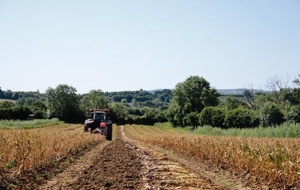 Getting the Soil Association Organic, B Corp and Pasture for Life** certifications has been an important journey and a transformative one for our business. I wanted to go and investigate that on a bigger scale and see how certifications can be helpful to the agricultural industry overall. That was what my application to the Nuffield Scholarship was based on, and I was very lucky to get the scholarship. I started in November last year on a two-year programme, where I’ll be doing about 10 weeks of international travel visiting other countries, looking at different farms that have chosen to certify, certification bodies and understanding what’s working and what’s not in terms of how certifications can encourage the transition towards more agroecological practices.
One of the most beneficial parts of the scholarship is meeting the other 24 UK scholars, which is the biggest cohort ever. We’ve spent a lot of time together in various workshops and conferences here in the UK, and then we went to meet all the other scholars from 14 different countries in Auckland in March. We spent nine days together with 91 scholars, all farmers or involved in farming in some way. That was so inspiring and motivating, and very much reminded me of being a student back at Univ. Suddenly you’re in this vibrant discussion community; you could sit next to a different person at every meal and find out what they’re doing and what they’re passionate about. It was a really stimulating experience and amazing to be part of that network of Nuffield farming scholars all over the world.
Part of the Nuffield ethos is to host other scholars, so there is a database of previous Nuffield scholars who live all over the world. As a Nuffield scholar, you can reach out to the network of Nuffield scholars in any country and they will host your visit, arrange contacts and even have you to stay. It is a unique and privileged thing to be part of. It is a wonderful way of connecting people and I am learning so much.
Arriving at Univ
I had completed my schooling on the Isle of Wight and attended the only independent school of the Isle of Wight at the time. The school didn’t have a relationship with a specific Oxford college, so I made an open application because I didn’t know any of the colleges. In hindsight, I was incredibly lucky to be allocated to Univ, and I remember going up for my interview. I’d been to Oxford once before when my Dad had taken me there for a wake, and it had stuck in my mind because the wake was held in one of the cricket pavilions in the parks. It was so beautiful, and I remember looking around and thinking that I’d like to spend time there. Coming from a relatively provincial place, it seemed like a big city to me.
How Univ shaped me
Univ is an inspiring and elevating environment to be in. It pushed me in lots of ways, academically and socially, and I got involved in many college activities. There were lots of opportunities, but at the same time it felt very friendly and homely. That helped to make that transition from a small island to city and university life.
Reverend Bill Sykes (College Chaplain 1978-2005) was amazing. I attended his reflection groups, and I still have one of his books. The reflection groups were one of the things that helped to make that experience of being away from home comforting. There was comfort, but there were also challenges, and the comfort gave me a sense of security which enabled me to grow. One of my first memories of Univ was meeting Reverend Sykes as I came in through the Lodge and I was aghast that he knew my name even though we had never met. He had everyone’s photo and knew everybody’s name, where they came from and a little bit about them – I have always remembered that.
Tutorials
I remember our economics tutors, Mark Taylor and Dr Mukherjee, very well, but there was quite a high turnover within management and economics tutors. I remember being a bit envious of the people who were studying subjects like history, where they had the same tutor who had been there for decades. However, it made it quite dynamic, and challenging but inspiring at the same time.
We had a young management tutor who used to come to the college. He was brilliant, and I remember him advising that we read Zen and the Art of Motorcycle Maintenance. He cared as much about personal growth as about management studies, so that was inspiring.
George Cawkwell (former Emeritus Fellow – and a central figure of the College for over 69 years) was also a big influence. It was thanks to the Cawkwell Scholarship that I was able to go travelling around the United States. I am always grateful for that formative experience. It was fundamental to my time at Univ. I travelled with Ross Avery who was in the year above me and we travelled across the States and were hosted by Old Members across the way. We had dinner with George Cawkwell and his wife Pat Cawkwell just before we went, to send us off on our way. I remember feeling privileged to be able to connect with this network of amazing and varied people across the US. I developed a love for exploration and travel, and a lot of my work before I joined the Garlic Farm was working in different countries and travelling and meeting people, so that scholarship really set me on that path.
How Univ shaped my way of thinking
Having studied economics and management, the fundamentals of those subjects come back all the time, and the ideas and philosophies behind them remain useful in my work and life in general. These subjects are evolving a lot at the moment and there is a lot of new thinking in both areas that I’m still fascinated to learn about.
I also have an amazing network of great friends who I stay in touch with. They are all brilliant. I think that the Univ culture is quite accepting and accommodating of people from different backgrounds and I really appreciated that. I have got quite a diverse little group of friends who have all stayed connected and we see each other at least once a year. We’ve all gone off and done different things and everybody is very down to Earth, I would say. I call on my friends when I have work or personal challenges, and we support each other as well as having great fun together. It’s a valuable thing.
Every year, my husband and I go to the Oxford Real Farming Conference, which is held in Oxford Town Hall in January, and we stay in College at Univ. For the last three years we have done that, and I always get a massive pang of nostalgia. It is just lovely to keep that connection. It takes me back to 25 years ago. And I always take a picture in the in the Main Quad and send it to my Univ WhatsApp group.
Bill Warren was the porter when I was there. He was brilliant. He forgave a lot of late night antics. We had lots of fun, and I would say that we were the more social gang at the time in the College. We kept the kept the bar going, I think!
I took my daughter and her two friends up to Univ a few years ago to have a look around. There is no university on the Isle of Wight, so you don’t get to see what a university town is like. I thought it would be useful for them to have a look around. We took them up for a day trip and it was great because everybody was very welcoming. We looked around a few colleges and went punting, and we got a chance to go inside to the library at Univ. I felt proud to be showing them around my old college.
I have just started a mentoring programme with children who are in the sixth form at a local state school here on the Isle of Wight, and they have identified a few students who are from deprived backgrounds who do not have any experience of university in their families. Myself and a few others who are Oxford graduates mentor them over six months, as they put together their university applications. It is exciting, and I hope that I can arrange a visit to Oxford at some point for some of them.
Life at Univ
In my first two years, I played rugby, hockey, tennis and was in the Boat Club. Being on the Isle of Wight, I had done a lot of sailing, but I had never done any sculling before. It was brand new to me, but I went boots-in. When I first arrived, we trained for bumps, and I ended up carrying on and rowing in my second year.
Rowing training was on the morning after a big club night at Park End, the club that we always used to go to, so I’d stay up until 3am and then go rowing at 5am. I remember the incredibly early morning starts cycling in the dark up to Godstow. There was mist hanging over the river and it was gorgeous – a wonderful experience.
After Univ
I had gone from school straight to university. I didn’t take a gap year because I was offered a place straight away, and when I finished at Univ I think it was the first time where the path wasn’t defined for me. I was a little unsure about what to do next. I was given all this choice and wasn’t sure where to take it. I had chosen economics and management partly because I loved economics, but also because when I looked in the undergraduate prospectus and I saw economics and management, there was a picture of people wondering around in front of a big glass building wearing suits. At that time, in my naivety, that was my idea of where I wanted to be – to be one of those people wearing a suit in London and not in a provincial environment! That was my aspiration at the time.
When I finished my course, economics and management might have led me to a city job, then it turned out that I ended up going straight to Paris. My idea was to go to France for a while, to make up for not having taken a gap year and to brush up my French for a few months there. I ended up living there for four years and avoided working in the city at all. While in Paris I worked helping to set up a small legal consultancy doing telecoms network licensing, mostly in Africa. So, I had lots of travel to sub-Saharan African countries. It was very niche. It was an unusual and vibrant life in Paris; very alternative and different to a lot of my contemporaries who had been scooped up in the milk round, into consulting and financial jobs, which were all fantastic, but I always felt a little bit like “my colourful life abroad”. They used to come and visit me and we’d compare the London scene with the ex-pat lifestyle. It was definitely different.
After four years in Paris, my group of friends started to move on, and I wanted a new challenge and something different, so I moved back to London and started to look again at what opportunities were out there. I remember going back to Oxford and going to the careers centre. I came across a media job which was doing feature reports in emerging markets with lots of travelling to interesting countries. So, I applied and ended up doing that for about three or four years. I worked in all sorts of fascinating places. including Saudi Arabia, Dubai, Serbia, Romania and South East Asia. It was not just visiting or travelling in those places but living there for up to six months for each project. It gave the opportunity to really get to know people and work with them, meet politicians, heads of industry and all while preparing feature reports for newspapers and magazines.
Coming home
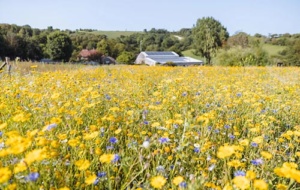 It took me by surprise in a way because I think from the time that I left the Isle of Wight to go off to Oxford, I just wanted to break free and go as far as I could. I did go and work all over the world, so I ticked that box and got rid of that bug, if you like. I thought that I would never live in England again, let alone live on the Isle of Wight, but I moved back to London because I’d met my husband, and we had two children, and we lived in London for six years together with the kids. And that’s when I wrote the books about garlic while I was having the children. I also worked briefly as an A level economics teacher. At that time we’d be travelling down to the Isle of Wight every weekend because we just loved being down here and then eventually we realised we should move down there. Although we were not initially intending to run the farm, it just fell into place that the general manager who had been here for a few years was looking to move on so the opportunity arose. He did a transition and then we took it on.
The environment and quality of life were part of the consideration. We were living in a flat in London, were lucky to have a garden, but there is more space here and access to the sea, the countryside. It is also a different pace of life here. Having said that, living in London with young children was a great patch in our lives. We had a bike with a box on the front to cycle the kids around meaning we didn’t have to get in the car too much. We enjoyed having access to parks close by and a great group of friends where we lived in North West London.
Advice for current and future students
You get out of it what you put in. That was the case for me. I got involved in college sports, which are accessible. You just have to go – it’s fun and you get to meet people. You become part of a Univ family, which is I think lovely.
There’s lots of other things to get involved in, such as the JCR. We used to manage various weird societies that people had dreamt up. I was president of the Anonymous Society at one point. The more you get involved, the more experiences you can have, and that is the unique thing about the College setup. Everything is very accessible, and you don’t have to do things at a university-level to have a go.
When I have been back to Univ over the last couple of years, that new photo exhibition of previous Univites (the Young Univ Gallery) is such a genius idea. The photos are beautiful. It gives you a little bit of an insight into what other people have done, and I would imagine that is quite inspirational to the current students. I would have found that the case, if that had been there when I was there, because it was quite hard at the time to visualise where you might end up and what the different possibilities were. I love there is such a variety of professions represented. That was an impressive project.
Books
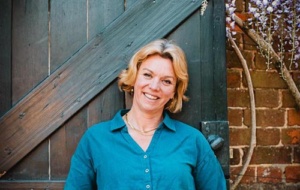 I would like to do a new book with updated recipes and information about cooking with garlic, farming garlic and all the projects that we are doing here. I am keeping an open mind because the Nuffield Scholarship has another year and a half to run. There may well be other opportunities. I want to stay with a steer on the business here and help to support it and transition myself into something new as well. I do not exactly know what that is going to look like yet! I think it will involve branching out in some way. My experience over the last few years, of running the business, securing our certifications and the Nuffield Scholarship have given me specific knowledge and experience that I might be able to share with other businesses
It is not difficult to get to the Isle of Wight and if anybody wanted to come and pay us a visit, we are open every day of the year. It is possible to do a day trip from Oxford, so visit us and make yourselves known – I will personally show you around as I’d love to meet any Univites who would like to see what we are up to.
*Certified B Corporations, or B Corps, are companies verified by B Lab to meet high standards of social and environmental performance, transparency, and accountability.
**Pasture for Life Certification means that animals are fed 100% pasture their whole lives which brings positive impacts for biodiversity and carbon, human health and wellbeing, and animal health and welfare.
This feature was adapted from one published in Issue 17 of The Martlet. Explore our back catalogue of Martlets below.


Published: 6 August 2025
Explore Univ on social media