Medical elective in Panama
 Univ War Memorial fund report – Grace Annetts (2019, Medicine)
During our final year of medical school, we are given the unique opportunity to undertake an elective placement anywhere in the world. This allows us to enhance our clinical skills, broaden our understanding of global health, and explore diverse healthcare systems. I chose to work with the charity Floating Doctors in Panama throughout March this year. Despite having heard fantastic reviews from former students who had spent time with the organisation, the experience exceeded all my expectations.
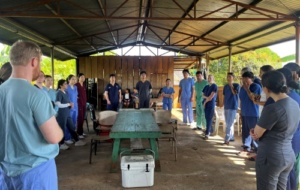
Floating Doctors is based in the Bocas Del Toro archipelago on the Caribbean coast of Panama. The organisation provides healthcare to rural, indigenous communities across the islands, many of which are otherwise underserved due to their location. Much of their work involves travelling by boat to set up mobile clinics in these remote areas, returning to each community every three months to ensure continuity of care. This sustainable and community-focused scheme was a major factor in my decision to do my elective with them.
Clinic days were divided into single-day visits and multi-day excursions. The single-day clinics involved travelling to and from a community within the same day, while the multi-day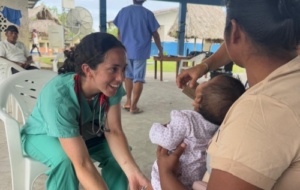 trips could require up to six hours of travel and involved staying overnight from Monday to Thursday. I particularly enjoyed the multi-day clinics, which allowed us to better explore and get to know the communities we were serving including playing sport with the kids and swimming with them in local rivers. We also got to sleep in hammocks which was a new and exciting experience for me!
Most of the clinical work we were doing was community healthcare; in particular, seeing patients with chronic conditions such as diabetes and hypertension, to check up on their symptoms and provide them with their medications. It was very interesting to see which conditions were more common in these communities than I am used to in the UK; in particular, scabies seemed to dominate! We did also get to see some more acute presentations of respiratory distress, machete wounds (surprisingly common) or infections, and these were often much more progressed than they would be in the UK because the healthcare is simply less accessible.
An especially rewarding part of my experience was working alongside the health education lead to deliver charlas (Spanish for “chats”) – interactive health education sessions tailored to different groups within the community. Topics included mosquito-borne diseases, sexual and reproductive health, and hygiene practices such as hand-washing. These sessions not only improved my communication skills, especially when discussing sensitive topics, but also allowed us to provide tangible resources like mosquito nets and reusable sanitary kits to improve long-term health outcomes.
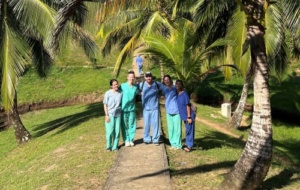 Fridays were spent at base, either counting and organising medications for the week ahead, seeing patients in the local clinic, or even helping out with the charity’s veterinary outreach. Each day was different, and I found myself constantly learning from the multidisciplinary team around me.
Overall, my time with Floating Doctors was a profound and enriching experience. It helped me improve my Spanish (slightly!), adapt to new clinical environments, and understand how resource limitations can shape healthcare delivery. I’m incredibly grateful to Univ’s War Memorial fund for supporting this unforgettable opportunity—and I certainly hope to return to work with Floating Doctors again in the future!
Published: 9 May 2025
Explore Univ on social media